
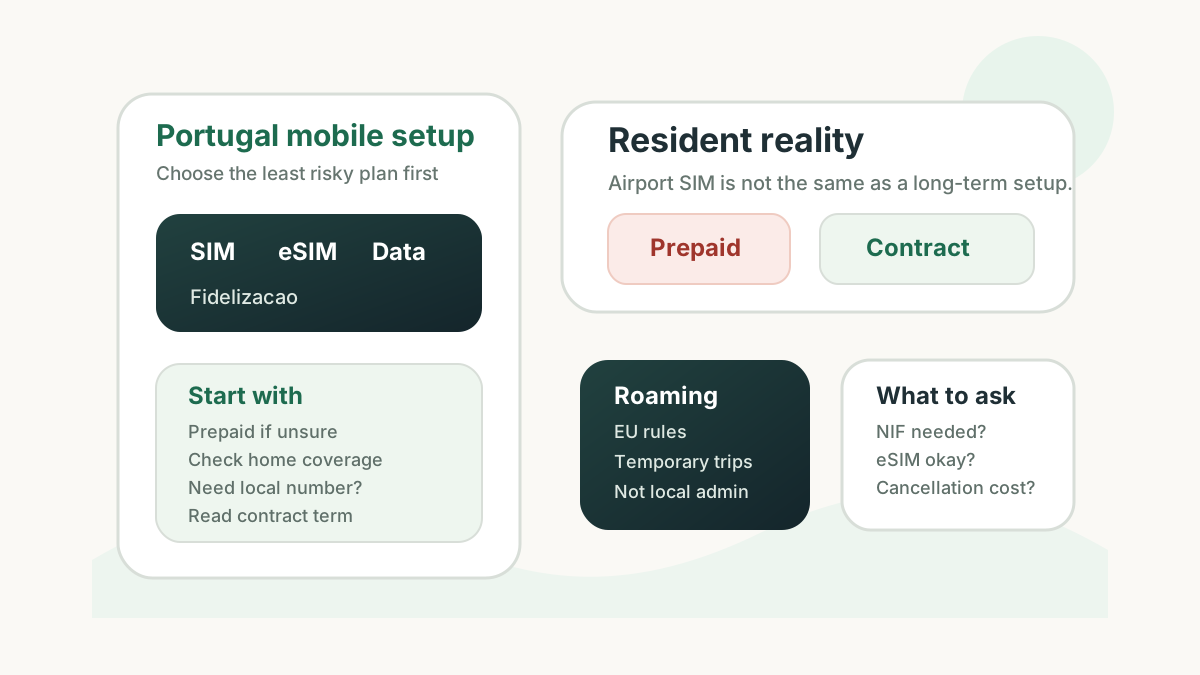
Phone service feels like a small purchase until it starts affecting everything else. In Portugal, a mobile number can become useful for banking, SMS verification, appointments, and daily admin much faster than many foreigners expect.
That is why the wrong first choice causes friction. Some people buy an expensive airport SIM because it is easy. Others sign a long mobile contract before checking coverage at home, before understanding cancellation costs, or before knowing whether a prepaid plan would have been enough.
This guide explains the practical choices: prepaid versus contract, SIM versus eSIM, what documents may be requested, what fidelizacao means, and how to avoid turning a simple telecom decision into an annoying long-term problem.
Last verified: April 26, 2026. Plan names, operator rules, eSIM availability, and loyalty terms can change. Confirm current conditions with the operator before signing.
Quick answer
Yes, foreigners can buy a SIM card in Portugal.
For many newcomers, the safest starting choice is:
- a prepaid or low-commitment option first
- then a contract later only if you know your address, your coverage, and your long-term needs
The biggest practical questions are:
- do you only need temporary data, or a long-term local number?
- do you need eSIM or a physical SIM?
- do you need a Portuguese number for banks, MB Way, and official services?
- are you about to sign a plan with
fidelizacao, meaning a loyalty period and possible exit cost?
Who this guide is for
This guide is for foreigners who:
- just arrived in Portugal
- need mobile data and a working local number
- are choosing between airport convenience and a longer-term plan
- want to understand contract risks before signing
- are not sure whether prepaid is enough
It is general information, not telecom or legal advice.
SIM card options in Portugal
The main practical choices are:
- physical SIM
- eSIM
- prepaid mobile service
- contract mobile service
Some foreigners need only a short bridge solution. Others are already resident and need something stable enough for:
- banking verification
- MB Way setup
- official contact details
- job applications
- landlords, schools, or public appointments
That is why “best SIM” is the wrong first question. The right first question is: what problem do I need this number to solve in the next few weeks?
Prepaid vs contract
This is the most important decision.
Prepaid
Prepaid is often best if:
- you have just arrived
- you do not know your long-term address yet
- you want to test coverage first
- you are still deciding between operators
- you only need mobile service temporarily
Contract
Contract plans may make sense if:
- you are staying longer term
- you want a more stable package
- you understand the loyalty-period rules
- you already know the operator works well where you live
The practical trap is signing a contract too early because it looks more “complete”. A long plan is not automatically a better plan.
SIM vs eSIM
Many foreigners prefer eSIM because it avoids waiting for a physical card and can be easier for travel-heavy setups.
But do not assume eSIM is always available for every device and every plan.
Official operator pages show that eSIM options do exist in Portugal, including prepaid examples, but the right check is still:
- is your device compatible?
- does the operator support the eSIM format you need?
- is the plan you want available as eSIM, not just the operator generally?
If the answer is unclear, ask before paying.
Documents usually needed
Document requirements vary.
For simple prepaid options, the process may be lighter. For longer-term contracts, operators may ask for more, including details connected to identity, address, or billing.
Practical questions to ask before signing:
- Do I need a NIF?
- Do I need a Portuguese address?
- Is this available only to residents?
- Is there a loyalty period?
- Is the cancellation cost explained clearly?
If the sales process is vague, slow down.
Phone number for banking and official services
This is the part many travel-focused guides miss.
A local number can be useful for:
- bank authentication
- MB Way setup or alerts
- appointment contact details
- delivery coordination
- landlord or utility contact
That does not mean you must rush into a long contract. It means a Portuguese number may become more useful than your foreign number once Portugal stops being a short stay and starts being daily life.
Our guide to MB Way and Multibanco in Portugal explains why local payment tools often work more smoothly with a local banking and phone setup.
Mobile internet and coverage
Do not choose only by brand reputation or what someone said on social media.
Coverage depends on:
- where you live
- whether your flat has weak indoor signal
- whether you commute a lot
- whether you use most data at home or mostly outside
And one more practical point: mobile data is not the same thing as home internet.
If you will work from home, study online, or stream heavily, a mobile plan may be a poor substitute for fixed home internet. Treat them as related but separate decisions.
Fidelização explained
Fidelizacao is the loyalty or commitment period in a contract.
This is where many foreigners make their first telecom mistake in Portugal.
The problem is not only the monthly price. It is the exit risk.
Before signing, ask:
- How long is the loyalty period?
- What happens if I cancel early?
- What if I move?
- What if the service quality is worse than expected?
If these answers are not clear, the contract is not clear enough yet.
EU roaming basics
EU roaming rules are helpful, but they are often misunderstood.
The European Commission and Your Europe explain that in the EU and EEA, normal roaming use is charged like domestic use when you are travelling temporarily.
That is useful for trips. It is not the same as building a long-term Portugal setup.
Important practical point:
- temporary travel use is one thing
- permanently living in Portugal while relying only on another country’s SIM can create limits or extra charges over time
So roaming can be a bridge. It is not always the best long-term solution.
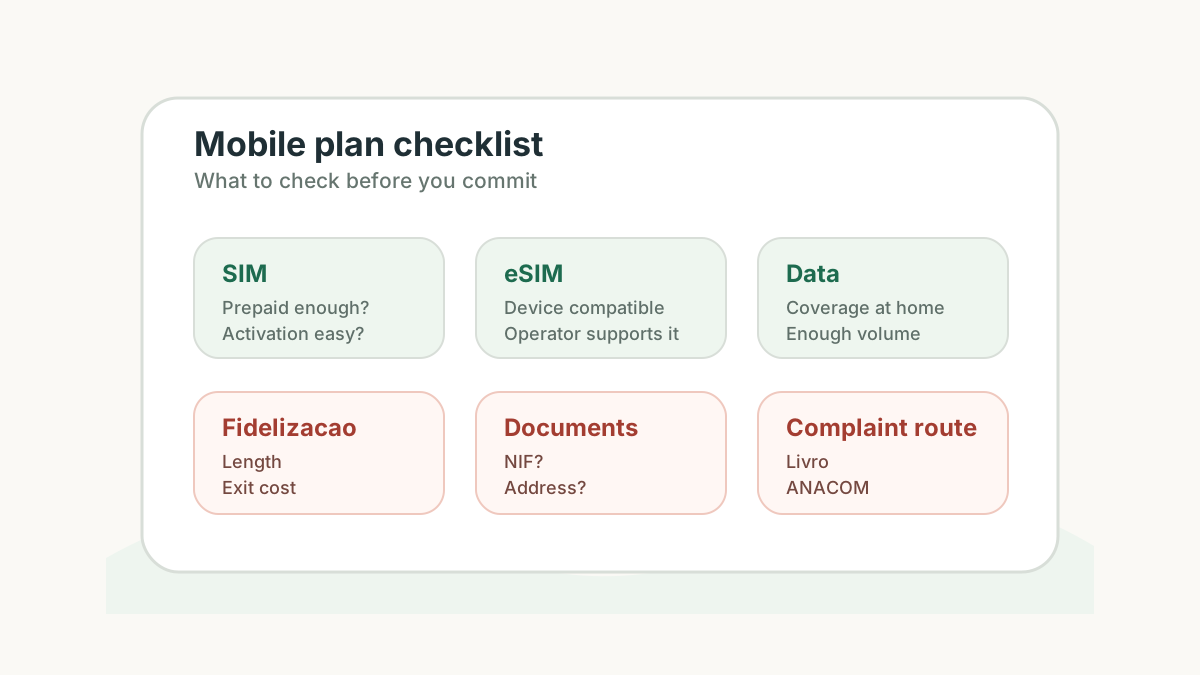
What to check before signing
Before you commit to a Portuguese mobile plan, check:
- prepaid or contract?
- physical SIM or eSIM?
- local number needed or not?
- NIF or address required?
- loyalty period?
- cancellation cost?
- real coverage where you live?
- whether you only need mobile data or also need fixed home internet separately?
If you have not answered those, you are probably too early to sign a long contract.
Common mistakes
- buying the first airport SIM without comparing the role it needs to serve
- signing a long contract before checking home coverage
- not asking about
fidelizacao - confusing roaming convenience with long-term local suitability
- assuming mobile data will solve home internet needs
- forgetting that a Portuguese number can matter for local admin and banking
Practical checklist
If you just moved to Portugal, the low-risk path is often:
- get a working connection fast
- decide whether you need only temporary data or a proper local number
- test coverage where you actually live
- read the contract term before signing
- keep complaint routes in mind if the operator setup becomes a problem
If you need help with telecom complaints or questions, ANACOM and the official complaints routes are useful to know.
Summary
The best first mobile decision in Portugal is usually the one that keeps your risk low while your life is still settling.
For many foreigners, that means:
- start with prepaid or low-commitment service
- only move to a longer contract after checking coverage and loyalty terms
- understand whether you really need a local number now
- treat roaming as temporary convenience, not automatic long-term strategy
That approach costs less time and usually less money.