
Driving in Portugal with a foreign licence can look simple until you become a resident, start buying a car, or discover that the rule for your country is not the same as the rule for someone else.
That is where a lot of bad advice starts. People hear “you have two years”, “you only need to register”, or “UK licences are fine”, without checking whether the advice actually matches their residency status and the country that issued the licence.
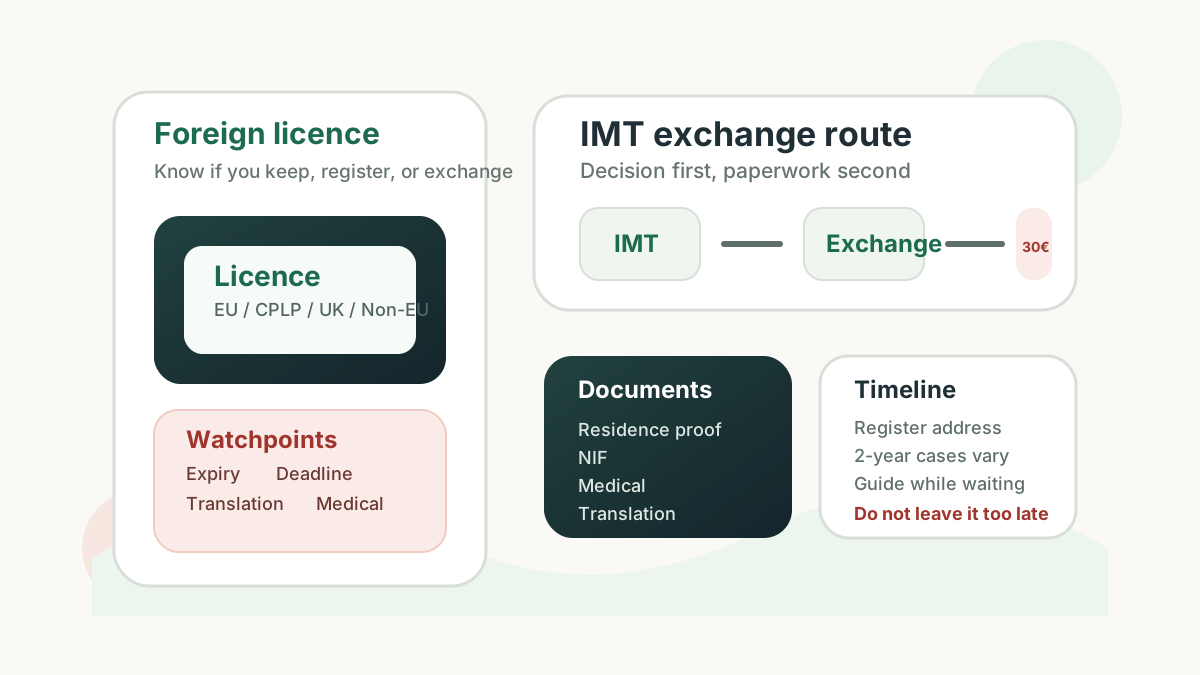
This guide explains how to think about foreign driving licences in Portugal in the right order: can you drive as you are, do you only need to register your address, or do you need to exchange the licence through IMT now?
Last verified: April 26, 2026. Driving-licence rules, country lists, IMT process steps, and practical waiting times can change. Always confirm the current rule with IMT or the official service before you rely on it.
Quick answer
Some foreigners can keep driving in Portugal with their foreign licence for a period of time. Others must register their address with IMT. Others must exchange the licence for a Portuguese one. The answer depends mainly on:
- the country that issued the licence
- whether you are already resident in Portugal
- whether the licence is still valid
- whether the issuing country falls under EU or EEA rules, bilateral or reciprocal arrangements, or international road-traffic conventions
If you become resident in Portugal, do not assume the licence issue can wait until you buy a car or until your foreign licence expires. In many cases, residency changes your obligations before the card in your wallet changes.
Who this guide is for
This guide is for foreigners who:
- moved to Portugal and already drive
- are planning to move and want to know if their current licence still works
- have an EU, UK, CPLP, OECD, or other non-EU licence
- want to buy a car, rent long term, or arrange Portuguese insurance
- need to plan around IMT timing instead of reacting late
It is general information, not personal legal advice.
When you can drive with a foreign licence
The first mistake many people make is asking, “How do I exchange my licence?” before asking, “Can I legally keep driving as it is for now?”
That first question matters because the answer changes by licence origin.
According to the current official exchange service:
- EU and EEA licences can be used in Portugal until the document expires
- licences from some countries with bilateral or reciprocal arrangements can still be used, but residency triggers an exchange timeline
- licences from countries not party to the relevant road-traffic conventions are not valid for driving in Portugal and must be exchanged immediately if you want to drive
That means the right starting point is not “EU versus non-EU” only. It is: which legal group does your issuing country fall into, and are you already resident in Portugal?
Exchange vs registration explained
This is the distinction competitors often explain badly.
Registration
For many people with EU or EEA licences, the first duty after becoming resident is not immediate exchange. It is registering your address with IMT.
The official English service says that if you live in Portugal with an EU or EEA licence, you must register your address with IMT within 60 days after moving. That registration is free.
So if your licence is from France, Germany, Ireland, Spain, or another EU or EEA country, the question may be:
- not “Do I exchange now?”
- but “Have I registered my Portuguese residence with IMT in time?”
Exchange
Exchange means giving up the foreign licence to receive a Portuguese one. That becomes necessary in different situations depending on licence origin and residency.
If you are resident and your case falls into an exchange category, do not confuse “I can still drive today” with “I can leave the paperwork for much later.”
Rules by licence origin
This is the practical decision map most foreigners need.
EU and EEA licences
If your licence is from an EU or EEA country, you can generally drive in Portugal until the licence expires. But if you move to Portugal, you must register your address with IMT within 60 days.
If the foreign licence is lifetime or has no expiry date, the official service says it must be exchanged within 2 years after taking up residence.
OECD and CPLP countries, including common expat cases
The official English service lists countries such as:
- Brazil
- United Kingdom
- United States
- Canada
- Switzerland
- Australia
- several CPLP countries
It explains that people with licences from these regimes may be able to drive in Portugal without exchange if certain conditions are still met, including age, validity, convention coverage, and time since issue or renewal.
That is the point many generic guides miss: for these countries, the answer is not always a simple yes or no. The conditions matter.
Bilateral or reciprocal-agreement countries
The official service also says that if your licence comes from a country with a bilateral agreement with Portugal and you are not resident, you may drive for 185 days. If you live in Portugal, you must exchange within 2 years after taking up residence.
Countries not party to the relevant conventions
This is the strictest group. The official service says that licences issued by countries not party to the relevant international road-traffic conventions are not valid for driving in Portugal. If you want to drive, you must request exchange immediately and take the required test for each category.
UK licences
UK licence holders are one of the groups most often discussed badly online.
The official service now treats the United Kingdom within the listed regimes that can allow driving without immediate exchange in some cases, but the residency and conditions still matter. Also, the official service specifically notes that foreigners resident in Portugal before Brexit follow the EU or EEA rule.
The practical conclusion is simple: do not rely on old Brexit forum advice.
What if the licence is expired?
An expired licence is a risk point, not a minor detail.
The official service repeatedly frames the normal exchange route around a valid foreign licence. If your licence is already expired, do not assume the exchange will proceed in the same way as a valid-licence case.
In practice, the safer move is:
- check IMT’s current rule for your licence origin
- ask whether renewal in the issuing country is required first
- do not keep driving on the assumption that an exchange request automatically cures an expired title
This is one of the situations where direct confirmation from IMT matters more than second-hand advice.
IMT explained
IMT is the Portuguese authority that handles mobility and transport matters, including driving-licence procedures.
For foreign-licence cases, IMT is the authority you deal with for:
- address registration where required
- exchange requests
- biometric collection if needed
- guidance on the next step in the process
The current official route is built around online forms and later communication from IMT. That means planning matters. If you need the licence issue solved before a job starts, before you buy a car, or before insurance begins, start earlier than you think you need to.
Documents usually needed
The official exchange service says the core requirements include:
- a valid foreign driving licence
- identification
- proof that you are allowed to reside in Portugal
- your Portuguese tax number
- an electronic medical certificate
- a psychological assessment certificate in certain categories
For some cases, especially bilateral-agreement or non-convention cases, the official service also says you may need:
- a statement from the issuing authority or diplomatic or consular authority confirming authenticity and key details
- an authenticated translation if the licence is not in Portuguese, French, English, or Spanish
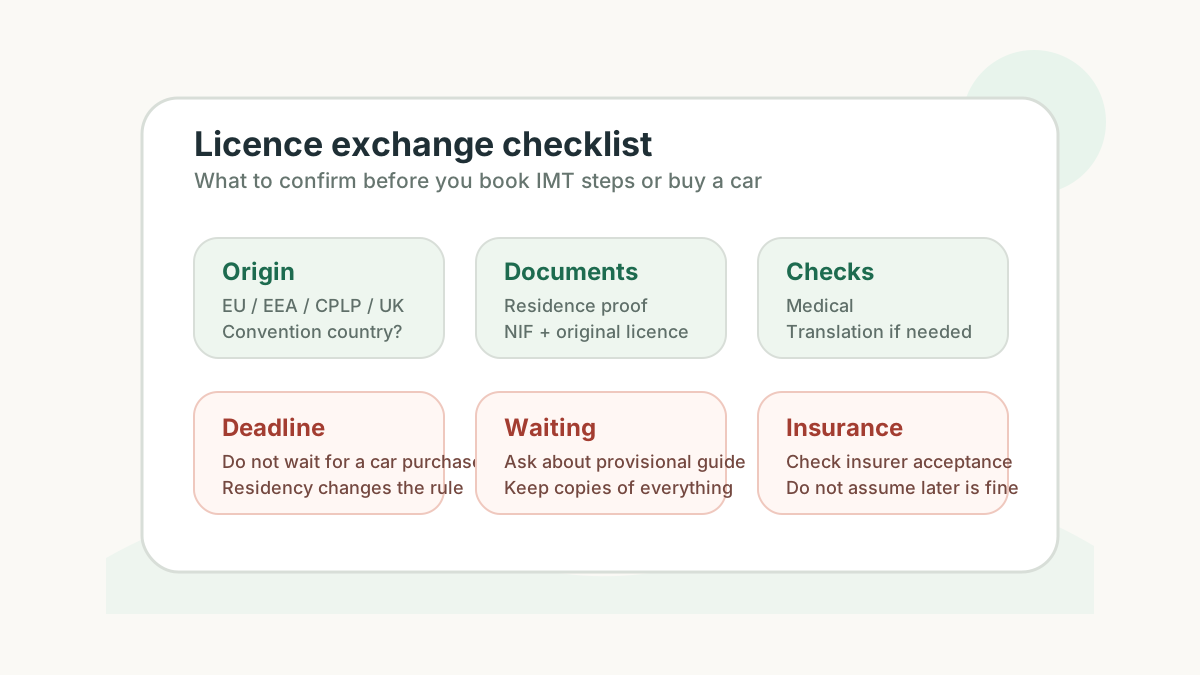
In practice, that means you should prepare the document logic before you start:
- Is my licence still valid?
- Is my residence proof current?
- Do I already have the Portuguese tax number I need?
- Does the issuing country or language create an extra translation or authenticity step?
Medical certificate, translation, and legalisation
This is where many applications slow down.
Medical certificate
The official service requires an electronic medical certificate sent online by the doctor to IMT. Do not assume a paper doctor’s note from another country will do the same job.
Psychological assessment
Certain higher or professional vehicle categories need a favourable psychological assessment certificate as well.
Translation
The official English service says translation is required when the licence is not issued in Portuguese, French, English, or Spanish. That is good news for many foreigners, but not for everyone.
Authenticity statement
For some country groups, the official service also requires a statement from the issuing authority or diplomatic or consular authority confirming that the licence is genuine and that the test was passed.
This is one of the easiest places to lose time. If your country is in one of those groups, solve the issuing-authority paperwork early instead of waiting until IMT asks for it later.
Deadlines and timing
This is the section people leave too late.
Some of the deadlines mentioned in the official service include:
- 60 days to register address with IMT for many EU or EEA residence cases
- 2 years after taking up residence for some exchange situations
- immediate exchange if the licence comes from a country not party to the relevant conventions and you want to drive in Portugal
The practical lesson is not to memorize one number and reuse it for every case. It is to identify your category first.
Also remember that “I still have time” is not the same as “I should wait”. If you know you will buy a car, commute to work, or need insurance soon, the safer move is to start before the last minute.
Can you drive while waiting?
This question matters because the process can involve surrendering the original licence.
The official exchange service says that the Portuguese licence is delivered within an average period of 60 days, except when a practical test is required. During that period, a provisional licence is issued that allows you to drive until you receive the Portuguese one.
That is useful, but do not overread it.
Practical points:
- it relates to the official exchange process
- it does not mean every informal waiting situation is covered
- it does not solve delays caused by starting too late, missing documents, or having an invalid licence
If you depend on driving for work or school, ask IMT how your exact case is treated before surrendering the original licence.
Buying a car and insurance considerations
Many foreigners leave the licence issue alone until they are ready to buy a car. That is often too late.
Before buying a car or taking out insurance, check:
- whether your current licence is still valid for driving in Portugal
- whether your residency has already triggered registration or exchange duties
- whether your insurer is comfortable with your current licence status
- whether you may soon need to surrender the original licence during exchange
If you buy first and fix the licence later, you risk turning a manageable paperwork task into an urgent one that affects commuting, school runs, or work.
Common mistakes
- assuming all non-EU licences follow one rule
- confusing address registration with full exchange
- waiting until a car purchase or insurance deadline forces the issue
- ignoring the difference between residency status and simple tourist presence
- forgetting that a licence with no expiry date may still trigger exchange after residency
- discovering too late that translation or authenticity paperwork is needed
- relying on old Brexit advice from forums instead of current official guidance
What can go wrong
The most common problems are practical rather than dramatic:
- your licence category is more complex than you thought
- the issuing country needs an extra authenticity statement
- your doctor certificate or translation is not in the right form
- you wait until the licence is close to expiry
- you start the exchange only after buying a car
- you assume you can keep driving without understanding whether IMT has issued the correct temporary permission
None of these problems are unusual. They are exactly why planning early matters.
When to contact IMT or a professional
Contact IMT directly if:
- you are not sure whether your case is registration or exchange
- your issuing country is difficult to classify
- your licence is close to expiry or already expired
- you need to know whether you can still drive while the process is pending
- you are waiting on a document request you do not understand
Consider qualified professional help if:
- your residence status is unclear
- your documents from the issuing country are hard to obtain
- you already bought a car or insurance and the licence timing now affects your plans
- you have been told your case needs an exam, translation, or extra proof and the consequences are not clear
Practical checklist before applying
Before you start an IMT licence process, check:
- Which legal group does my issuing country fall into?
- Am I already resident in Portugal?
- Do I need only to register my address, or do I need a full exchange?
- Is my licence still valid?
- Do I need translation?
- Do I need an issuing-authority authenticity statement?
- Do I already have my Portuguese tax number and residence proof ready?
- Do I need the medical certificate and, if relevant, psychological assessment?
- Will I need to drive for work, study, or family commitments while the process is pending?
- Have I checked the issue with my insurer before buying a car?
Summary
The biggest mistake with foreign driving licences in Portugal is treating every foreigner as if they face one rule.
They do not.
Your next step depends on where the licence was issued, whether you now live in Portugal, whether the licence is still valid, and whether your case needs address registration, exchange, or immediate action.
If you solve that first and prepare the documents before you actually need the car, the process becomes much easier to manage. If you leave it until a purchase, an insurance deadline, or an expiry problem forces the issue, the same process gets more stressful very quickly.