

Renting a house in Portugal as a foreigner is not just about finding a place you like. The rental contract can become part of your proof of address, your tax address, your bank paperwork, and sometimes your immigration file.
That is why the safest question is not only “Can I afford this rent?” It is also: “Will this rental create a clear document trail I can use later?”
This guide explains renting in Portugal for foreigners in practical English: documents, NIF, deposits, contracts, rent receipts, proof of address, red flags, and what to check before signing.
Last verified: April 26, 2026. Housing, tax, and immigration-related requirements can change. Always check official sources and get qualified legal advice before signing if the contract or payment request is unclear.
Quick Answer
Foreigners can rent homes in Portugal, but landlords and agencies often ask for more documents than newcomers expect. You may be asked for ID, NIF, proof of income, employment or savings evidence, a residence document or visa, and sometimes a guarantor.
A written Portugal rental contract is important. It should identify the landlord, tenant, property, rent, dates, deposit, advance rent, and rules. Rent receipts and contract registration with Finanças can matter later for proof, tax, and administrative processes.
Do not pay large amounts before confirming the property, landlord identity, contract terms, and payment destination.
Who This Guide Is For
This guide is for:
- Foreigners renting in Portugal for the first time
- People moving for work, study, family, retirement, or remote work
- Tenants who need proof of address for AIMA, banks, Finanças, or healthcare
- People without Portuguese payslips yet
- Non-residents arranging housing before arrival
- Anyone worried about rental scams or unclear deposits
This is general information, not legal advice.
Renting in Portugal: What Foreigners Should Expect
The rental market can move quickly in popular cities. Landlords may receive many applications, and foreigners can be asked for extra reassurance because they may not have Portuguese payslips, a local guarantor, or a long local history.
Common practical challenges include:
- You need a NIF before many landlords will prepare a contract
- You may not yet have Portuguese proof of income
- Some landlords ask for a fiador (guarantor)
- Some properties are advertised before all paperwork is clear
- Some landlords prefer tenants who can move fast
- Some scams pressure foreigners to pay before seeing the property
- AIMA, banks, or Finanças may later ask for address evidence
The goal is to protect yourself while still being ready to act when a real property appears.
Documents Landlords Usually Ask For
Requirements vary by landlord, agency, city, property type, and your profile.
Common documents include:
| Document | Why it may be requested |
|---|---|
| Passport or ID card | To identify the tenant |
| NIF | To prepare the contract and receipts |
| Proof of income | To show you can pay rent |
| Employment contract or payslips | To support your application |
| Bank statements or savings proof | Common if you do not have Portuguese payslips |
| Residence permit, visa, or appointment evidence | Sometimes requested from foreign tenants |
| Guarantor details | Used when the landlord wants extra security |
| Previous landlord or employer reference | Sometimes requested, especially by agencies |
If you do not yet have Portuguese payslips, prepare a simple explanation and alternative proof: foreign payslips, employment contract, remote-work contract, pension proof, savings statement, scholarship letter, or company documents.
NIF and Proof of Address
A NIF is commonly needed for renting in Portugal because it helps identify the tenant for contracts, receipts, and tax-related records. If you do not have one yet, start with our guide to getting a NIF in Portugal.
Proof of address is more circular. You may need an address to deal with banks or public services, but you may also need documents to get the rental contract that proves the address.
A stronger rental address file usually includes:
- Written rental contract
- Your correct full name and NIF
- Correct property address
- Rent payment record
- Rent receipts where applicable
- Utility bill or other supporting document, if available
- Any official address certificate if you later obtain one
For tax-address changes, Portuguese tax authority guidance for foreign citizens lists a residential rental agreement as one possible address document in relevant situations. AIMA guidance can also refer to accommodation evidence such as rental contract and rent receipt in some cases.
Rental Contract Explained
A rental contract is the written agreement between landlord and tenant. In Portuguese, it is usually called a contrato de arrendamento.
Before signing, make sure the contract clearly states:
- Full names and identification details of landlord and tenant
- NIFs where applicable
- Full property address
- Start date and contract duration
- Monthly rent
- Payment method and due date
- Deposit amount and return conditions
- Any advance rent
- Who pays utilities, condominium charges, and repairs
- Inventory or condition notes, if furnished
- Notice periods and renewal terms
- Signatures of the parties
Do not rely on verbal promises for important points. If the landlord says something matters, ask for it in the contract or written messages.
Deposit, Advance Rent, and Guarantor
Foreigners often hear different words used loosely: deposit, caução, advance rent, guarantee, first month, last month, and fiador.
They are not the same.
| Term | Practical meaning |
|---|---|
| Deposit / caução | Money held as security for damage, unpaid rent, or contract obligations |
| Advance rent | Rent paid before the month it relates to |
| First month rent | The first normal rent payment |
| Guarantor / fiador | A person who may be responsible if the tenant does not pay |
Portuguese Civil Code Article 1076 is relevant to advance rent and guarantees, but you should get legal advice if a landlord asks for a large upfront amount or if the wording is unclear.
As a practical rule, never treat a large payment request as “normal” just because the market is competitive. Ask for a written breakdown:
- How much is rent?
- How much is deposit?
- How much is advance rent?
- What is refundable?
- When is it refundable?
- Which bank account receives the money?
- Does the account holder match the landlord or agency?
Rent Receipts and Finanças
Rent receipts matter because they help prove payments and may connect the tenancy to tax records. In Portuguese, electronic rent receipts are often called recibos de renda eletrónicos.
Portal das Finanças has services for rental matters, including rent receipt and contract-related services. Tenants should keep:
- Signed contract
- Proof of bank transfers
- Receipts or invoices
- Messages about payment instructions
- Any Portal das Finanças records visible to them
If a landlord refuses to issue receipts or avoids written records, be cautious. That can create problems later when you need proof for tax, address, immigration, or dispute purposes.
Can a Rental Contract Prove Your Address?
Often, yes, a rental contract can help prove address. But do not assume one document will be accepted everywhere.
Different institutions may ask for different evidence. A bank may ask for one type of address proof, Finanças may ask for another, and AIMA may have its own accommodation evidence requirements.
A stronger proof-of-address package may include:
- Rental contract in your name
- Recent rent receipt
- Utility bill if available
- Tax address confirmation
- Junta de Freguesia residence certificate, if obtained
- Declaration or form requested by the specific institution
The important point is consistency. Your name, NIF, address, dates, and supporting documents should tell the same story.
Common Rental Scams and Red Flags
Foreigners are vulnerable because they may be under time pressure, applying from abroad, or unfamiliar with Portuguese paperwork.
Be careful if:
- You are asked to pay before seeing the property or verifying the landlord
- The rent is far below market level
- The advertiser refuses video calls, visits, or agency verification
- The payment account name does not match the landlord, agency, or contract
- You are rushed because “many people are waiting”
- The landlord refuses a written contract
- The contract has missing property details
- The landlord will not provide receipts or written payment confirmation
- You are asked to send documents through insecure channels without explanation
- You are told not to worry about registration, receipts, or official records
If something feels wrong, pause. Losing a good apartment is better than losing several months of rent to a scam.
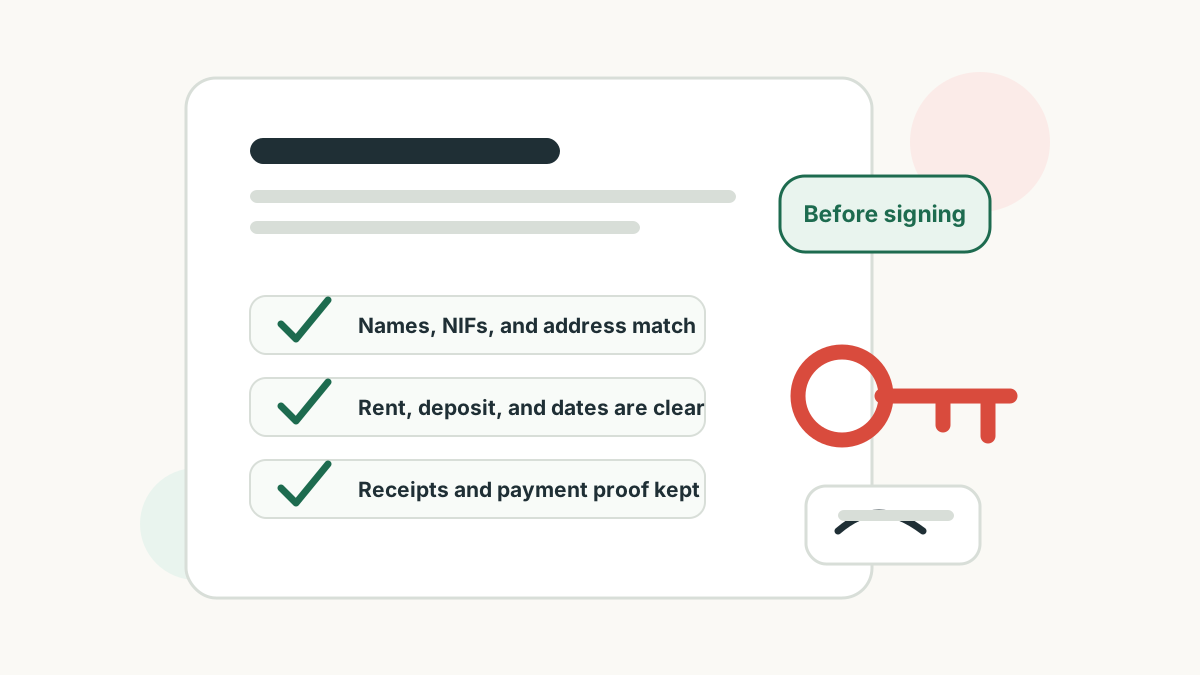
Checklist Before Signing
Before you sign a lease agreement in Portugal, check:
- You have seen the property in person or through a trusted representative
- The landlord or agency identity is clear
- The property address matches the contract
- Your name and NIF are written correctly
- Rent, deposit, and advance rent are separated clearly
- Refund rules for the deposit are written
- Utilities and condominium costs are explained
- Furniture and condition are documented with photos
- Payment account details are confirmed in writing
- You understand renewal and notice rules
- You have time to ask a professional if the contract is unclear
Checklist Before Moving In
Before you move in, keep a record of:
- Signed contract
- Payment proof
- Deposit receipt or written confirmation
- Keys received
- Meter readings for electricity, gas, and water
- Photos or video of property condition
- Inventory of furniture and appliances
- Existing damage
- Landlord or agency contact details
- Rules for repairs and emergencies
Send important move-in notes in writing. A simple email with dated photos can prevent arguments later.
What If You Do Not Have Portuguese Payslips Yet?
Many foreigners rent before they have a Portuguese salary history.
You can strengthen your application by preparing:
- Foreign employment contract
- Remote-work contract
- Recent payslips from another country
- Savings statement
- Pension or scholarship proof
- Company ownership or freelance activity documents
- Portuguese NIF
- Portuguese bank account or proof you can pay rent
- Reference letter, if useful
Some landlords may still ask for a guarantor or more security. If the requested upfront amount is high, get advice before paying.
Common Mistakes
- Paying a deposit before verifying the property and landlord
- Signing a contract with missing names, NIFs, dates, or address
- Not asking whether receipts will be issued
- Treating cash payments as safe without written proof
- Not keeping payment records
- Assuming a contract will be accepted everywhere as proof of address
- Not photographing the property condition at move-in
- Ignoring unclear deposit wording
- Accepting pressure because of visa or AIMA deadlines
- Not getting help when the contract is difficult to understand
Summary
Renting a house in Portugal as a foreigner is easier when you treat the rental file as an official document trail, not just a place to sleep. Prepare your ID, NIF, income evidence, and banking details before applying.
Before signing, check the landlord, property, rent, deposit, payment method, and contract wording. Keep receipts, transfer proof, photos, and written messages. A clean rental contract and payment trail can help later with proof of address, AIMA, banks, Finanças, and daily life in Portugal.
If a payment request or contract clause feels unclear, pause and get qualified advice before sending money.