
Moving to Portugal as an international student is not just a university task. It is a document task, a housing task, a money task, and often an AIMA timing task at the same time.
That is why students get overwhelmed. The visa process may be in one country, the university instructions in another portal, and the after-arrival steps spread across housing, banking, health, and immigration systems that do not explain each other clearly.
This checklist is built for the practical reality after acceptance: what to bring, what to protect, what to do in the first week, and which registrations matter only in certain situations.
Last verified: April 26, 2026. Student visa and residence practice can change, and universities may have their own administrative steps. Confirm the latest instructions with AIMA, your university, and official visa guidance before travel.
Quick answer
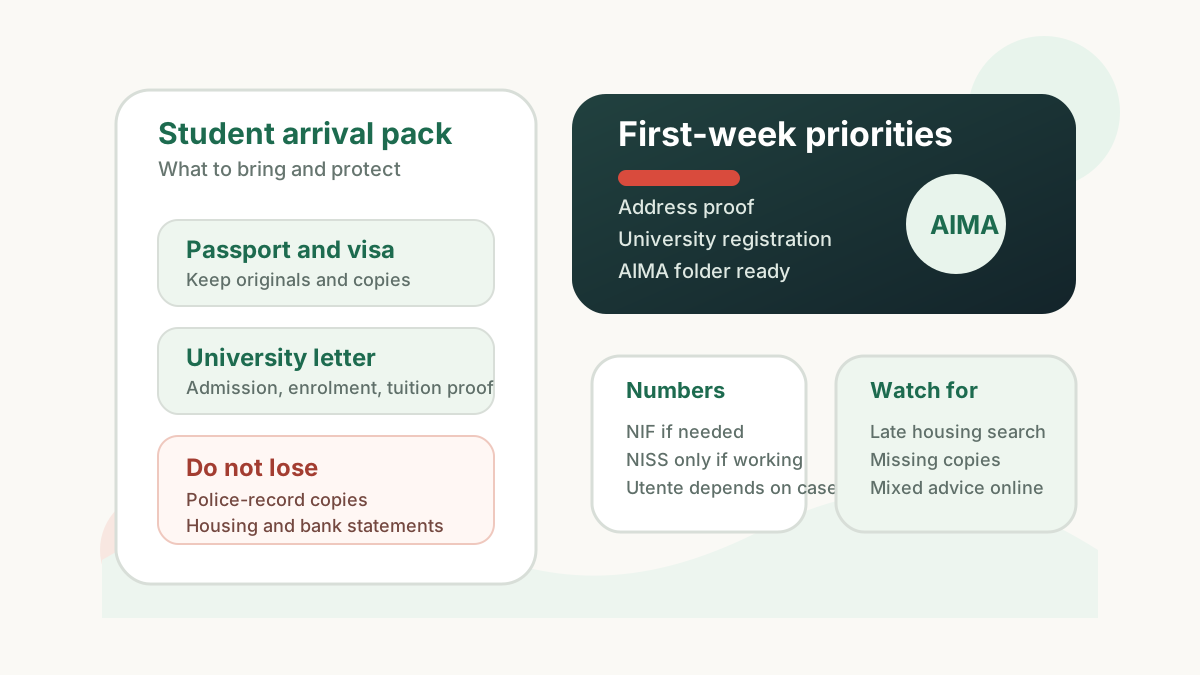
Before arriving in Portugal, an international student should organize the key document bundle first:
- passport
- visa or entry document
- university admission or enrolment proof
- accommodation proof
- proof of funds or bank statements
- copies of police-record and identity documents if those were part of the visa process
After arrival, the first practical priorities are usually:
- confirming your local address setup
- keeping your university paperwork accessible
- sorting out a NIF if you need one for banking, rent, or contracts
- preparing for the AIMA step connected to your residence situation
- deciding whether you need a NISS or an utente number based on whether you will work or use public-health registration
Who this checklist is for
This guide is for:
- non-EU students moving to Portugal for higher education
- international students arriving with a residence visa for study
- students trying to understand what happens after arrival
- students who are not sure whether they need NIF, NISS, or public-health registration immediately
- students who want a practical first-week plan, not just a document list
It is general information, not personal immigration advice.
Before you leave your country
Do the organization work before travel, not after you land tired and under time pressure.
Prepare:
- physical originals in one secure folder
- digital scans stored in at least two safe places
- printed copies of the most important documents
- a simple list of what each document is for
This sounds basic, but it prevents a common student mistake: arriving with the right documents and still losing time because nothing is easy to find when a university office, landlord, or public service asks for it.
Documents to bring from home
The exact list depends on your case, but many international students should travel with:
- valid passport
- visa or travel document used for entry
- university acceptance, admission, or enrolment proof
- tuition payment proof if relevant
- accommodation proof
- bank statements or proof of financial means
- copies of any criminal-record document used in the visa process
- passport photos if your process still needs them
- copies of insurance or health-coverage documents if relevant
Protect originals properly
Students sometimes hand over originals too casually because they assume “the office will keep a copy.” That can become a major problem later.
Before you leave home:
- scan every important document
- keep copies separate from the originals
- know which documents are hard to replace quickly
- avoid carrying every original in your day bag once you are settled
If an office needs a copy, do not assume it needs the only original in your possession.
First week in Portugal
Your first week should focus on reducing friction, not doing every task at once.
Use this order:
- Confirm where you are actually staying and what proof you have for it.
- Complete the university’s arrival or enrolment steps.
- Organize local SIM, payment access, and immediate transport basics.
- Decide whether you need a NIF immediately.
- Check what your AIMA timeline is and what documents are still needed.
If you are worried about language at appointments, solve that early as well. Ask whether your university has student support, whether a friend can attend where appropriate, or whether the office can communicate in English.
If you are staying in temporary housing first, keep that separate from long-term address proof. Those are not always the same thing in practice.
NIF, NISS and utente number for students
This is where students get mixed advice.
Do students need a NIF?
Often yes, for practical life. A NIF can become useful quickly for:
- opening a bank account
- signing a rental contract
- dealing with invoices or contracts
- handling some local administrative steps
It is not the same thing as residence permission. It is a tax number used across many practical systems.
Do students need a NISS?
Not automatically just because they are students.
Students usually need a NISS when they are working, entering a social-security-related setup, or otherwise dealing with work-linked administration. If you are not working, do not assume NISS is your first task.
Do students need an utente number?
Not every international student handles this immediately. It depends on residence status, health coverage route, and what kind of healthcare access applies to your situation.
If public healthcare registration becomes relevant, start with our guide to getting an utente number in Portugal.
AIMA student appointment preparation
The biggest emotional stress point for many students is AIMA timing.
Students often worry because:
- the appointment is after arrival
- the appointment is not yet confirmed
- they are unsure which documents still matter after entry
The practical rule is not to panic. What matters is that you keep your document set organized and follow the route that applies to your permit type.
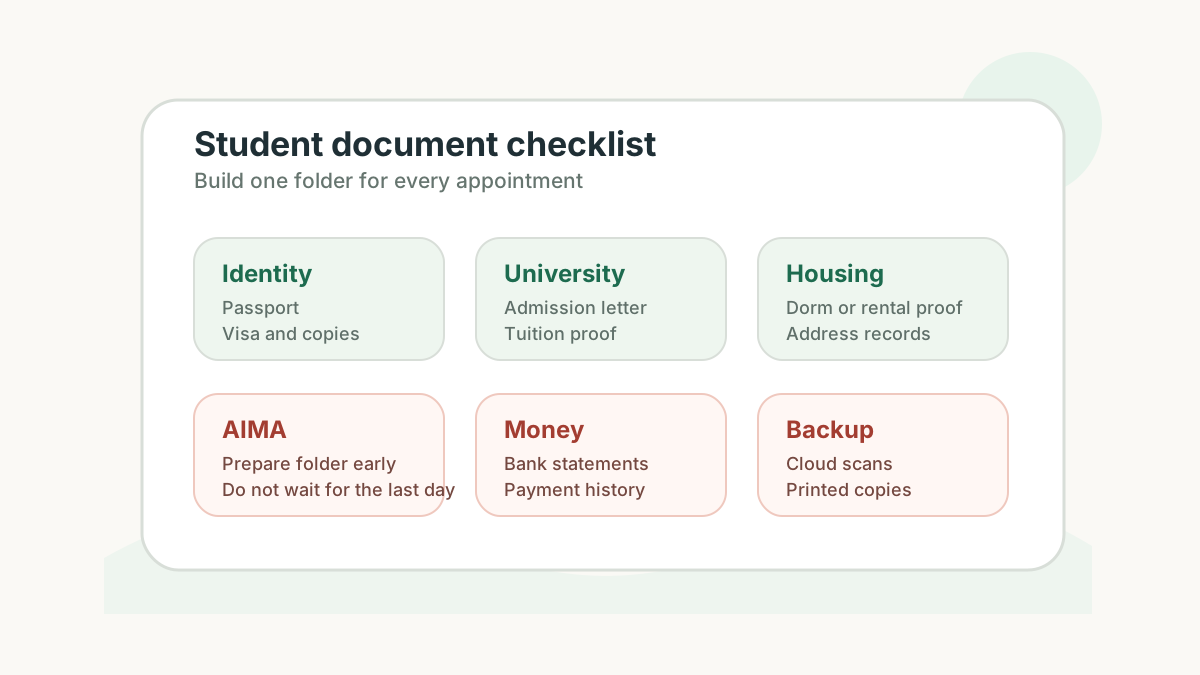
Prepare a dedicated AIMA folder with:
- passport
- visa or entry record
- university admission or enrolment proof
- accommodation proof
- proof of funds
- copies of supporting documents you used for the visa process
If your appointment is later than you expected, do not make up a workaround from random forum advice. Follow AIMA guidance and keep proof of your student status and local address ready.
Accommodation proof for students
Accommodation is one of the most underestimated problems in Portugal, especially in Lisbon, Porto, and large university cities.
Students should understand the difference between:
- having a place to sleep
- having a document that works as proof of accommodation
Possible proof can include:
- student residence or dorm confirmation
- rental contract
- official accommodation declaration from a university residence where applicable
- other formal lodging proof accepted in your process
If you only have short-term housing when you arrive, keep records carefully and ask what later proof will be needed for longer-term steps.
Our renting guide for foreigners is useful if you move from temporary to private housing.
Bank account and money proof
Students often need to show that their finances are organized, even if they do not need a Portuguese bank account on day one.
You may need to keep together:
- bank statements
- scholarship proof if applicable
- tuition payment proof
- accommodation payment proof
- account access that works reliably from Portugal
Should you open a Portuguese bank account immediately? Not always. But it becomes more useful if you need to:
- receive money locally
- pay rent or utilities
- deal with recurring Portuguese payments
- keep cleaner local records
Our guide to opening a bank account in Portugal explains when it becomes worth doing.
Can international students work?
Students often get oversimplified answers here.
The practical answer is: do not assume that being a student means you can ignore work rules, and do not assume that a student permit blocks all work either.
AIMA states that holders of a residence permit for study can carry out professional activity, subordinated or independent, as a complementary activity to the study purpose behind the permit. That does not mean every job setup is automatically simple.
If you plan to work:
- check what permit or residence condition applies to you
- understand whether you need a NISS
- understand whether the work is employee work or self-employment
- keep university workload and housing stability in mind
If a work opportunity appears quickly, do not rush into a bad contract because you are new.
University documents to keep
Keep these easy to access:
- acceptance or enrolment letter
- tuition invoices or payment receipts
- student card or registration proof
- course schedule if needed
- housing confirmation from a university residence if applicable
- any official message related to arrival, orientation, or status confirmation
Many offices will ask for the same information in different ways. A student who can produce documents quickly saves time and stress.
Common mistakes
- Bringing only digital files and not protecting originals.
- Assuming NISS is required immediately even without work.
- Ignoring housing proof until an appointment needs it.
- Submitting original documents without keeping copies.
- Waiting too long to sort out a NIF when contracts or banking depend on it.
- Believing every online forum answer applies to your permit type.
- Underestimating how difficult housing can be before term starts.
Practical student checklist
- Keep passport, visa, university letter, and accommodation proof together.
- Scan every important document before travel.
- Keep copies of anything hard to replace.
- Confirm your actual address situation after arrival.
- Complete university registration steps first.
- Get a NIF if you need it for banking, rent, or contracts.
- Do not chase a NISS unless work or a specific official step makes it necessary.
- Prepare an AIMA folder early instead of the day before.
- Keep bank statements, tuition proof, and accommodation proof organized in one place.
- Check work rights before accepting part-time or freelance activity.
Summary
An international student in Portugal needs more than a visa and an acceptance letter. The real challenge is keeping the document chain clean from arrival onward: identity, housing, student status, money proof, and AIMA-related records.
If you sort the first week well, many later steps become easier. Focus on document organization, address proof, university paperwork, and the difference between numbers you need immediately and numbers you may only need if you work or use specific services.