
Opening a bank account in Portugal as a foreigner is usually possible, but it is not always as simple as walking into a branch with a passport. Banks need to identify you, understand where you live, understand where you pay tax, and check the source of money that may enter the account.
That is why two foreigners can have very different experiences. One person opens an account in one visit. Another is asked for extra documents, proof of income, a Portuguese address, or tax residency information.
This guide explains how to open a bank account in Portugal as a foreigner, what documents banks usually ask for, when a NIF matters, whether Revolut or Wise can replace a Portuguese bank, and what to check before you apply.
Last verified: April 26, 2026. Bank requirements, fees, remote opening rules, and compliance checks can change. Always confirm requirements directly with the bank before applying.
Quick Answer
Yes, foreigners can often open a bank account in Portugal. In practice, most banks will ask for a valid ID, a tax identification number, proof of address, and information about your income, work, or activity.
For many foreigners, the key document is the NIF. A NIF is not the same as a bank account, but it is commonly requested when opening a Portuguese bank account. Some banks may also ask for a Portuguese address or residence document, especially if you are applying as a resident.
Non-residents may be able to open accounts, but banks can apply stricter checks. Online account opening may be possible with some banks, but it often depends on nationality, ID type, residence status, and whether the bank can verify you remotely.
Who This Guide Is For
This guide is for foreigners who:
- Recently moved to Portugal
- Are preparing to move and want a Portugal bank account for foreigners
- Need an account for salary, rent, utilities, IRS refunds, or daily spending
- Have a NIF but are not sure what else banks ask for
- Are deciding between a traditional Portuguese bank and a digital account
- Have Revolut or Wise and want to know whether that is enough
- Are non-residents trying to understand what may be possible
This is general information, not personal financial advice.
Why Foreigners May Need a Portuguese Bank Account
You can live part of your life in Portugal with an EU digital account or foreign card, but a Portuguese bank account can still make practical life easier.
Foreigners commonly need a Portuguese account for:
- Receiving a Portuguese salary
- Paying rent by bank transfer
- Setting up utilities or direct debits
- Receiving IRS refunds
- Paying Portuguese tax or service charges
- Showing financial organization for some applications
- Using local payment systems more easily
- Avoiding repeated card or transfer friction
Some employers, landlords, or systems may prefer a Portuguese IBAN, especially one beginning with PT50. EU rules generally protect the use of SEPA accounts across member states, and Banco de Portugal provides a channel for IBAN discrimination complaints. Still, foreigners often choose a Portuguese account because it reduces practical friction.
Documents Usually Needed
Exact requirements vary by bank. Before booking an appointment, ask the bank for its current document list for your nationality, residence status, and account type.
Commonly requested documents include:
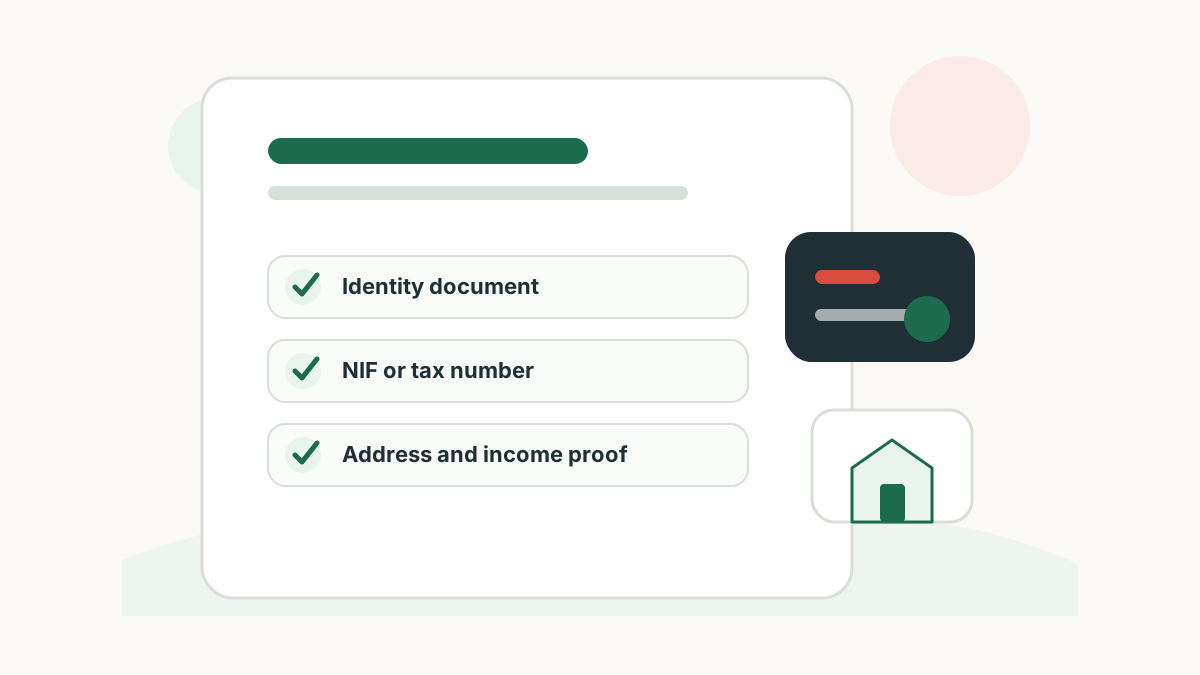
| Document | Why the bank asks for it |
|---|---|
| Passport or national ID card | To identify you |
| NIF or foreign tax number | To connect you to tax records and account reporting |
| Proof of address | To confirm where you live |
| Residence card, visa, or entry/residence evidence | To understand your legal/residence status |
| Proof of income or employment | To understand source of funds and account activity |
| Tax residency declaration | For CRS, FATCA, and compliance reporting |
| Phone number and email | For account access and security |
NIF and Address Requirements
The NIF is one of the most common requirements when opening a Portuguese bank account. If you do not have one yet, start with our guide to getting a NIF in Portugal.
A bank may also ask for proof of address. This can be a Portuguese address or a foreign address, depending on whether you are applying as a resident or non-resident and what the bank accepts.
Possible address documents may include:
- Rental contract
- Utility bill
- Bank statement from another bank
- Tax authority address document
- Residence certificate or official address document
- Employer or public entity document in some cases
If you have just arrived and do not yet have a rental contract, ask the bank what it accepts for newcomers. Do not assume every branch applies the same internal practice.
Resident vs Non-Resident Banking
A resident account and a non-resident account are not always the same in practice.
If you are resident in Portugal, the bank may expect Portuguese address evidence, residence documentation, and clearer information about your local activity.
If you are non-resident, the bank may still be able to open an account, but it may ask for stronger proof of foreign address, foreign tax number, source of funds, and the reason you need the account in Portugal.
Common reasons for extra checks include:
- You do not yet live in Portugal
- Your documents show different addresses
- You are paid from another country
- You are self-employed or have irregular income
- You are a US person for FATCA purposes
- Your tax residency is unclear
- Your expected account activity is high compared with your declared income
This does not mean you are doing anything wrong. Banks are required to perform identity and compliance checks.
Can You Open a Bank Account Online?
Sometimes. Some Portuguese banks and digital banking services allow remote or app-based account opening. Others require a branch visit, video identification, Portuguese mobile number, compatible ID document, or later document confirmation.
Remote opening can fail if:
- The app cannot verify your passport or ID
- Your nationality or residence status needs manual review
- Your address document is not accepted
- Your name appears differently across documents
- The bank needs additional compliance information
- You cannot receive the required SMS, email, or video verification
If the account is urgent for rent, salary, or immigration paperwork, do not rely on a single online attempt. Have a branch option and a backup bank in mind.
Portuguese IBAN Explained
An IBAN is an international bank account number used for transfers and direct debits. Portuguese bank accounts usually have an IBAN beginning with PT50.
A Portuguese IBAN can be useful because some local systems, employers, landlords, or payment processes are more familiar with it. However, an EU SEPA IBAN from another member state should generally be usable for euro transfers and direct debits.
If a company refuses an EU IBAN only because it is not Portuguese, this may be IBAN discrimination. Banco de Portugal has a form for reporting cases involving refusal of an IBAN that does not start with PT50.
Practical point: even when you have rights, solving the issue can take time. If you need rent, salary, utilities, or refunds to work smoothly now, a Portuguese account may still be the easiest route.
Revolut or Wise vs a Portuguese Bank
Revolut, Wise, and similar services can be useful for spending, currency conversion, and SEPA transfers. For many foreigners, they are a good bridge while settling in.
They may not fully replace a Portuguese bank if:
- Your employer prefers a Portuguese IBAN
- Your landlord insists on a local transfer setup
- A utility company rejects or struggles with a non-PT IBAN
- You need Portuguese direct debits that work smoothly
- You want access to Portuguese bank branches
- You need a formal Portuguese bank statement for a local process
- You want Portuguese products such as local credit, mortgage, or certified bank documents
They may be enough if:
- You mainly need card spending and transfers
- Your employer accepts the IBAN
- Your landlord accepts transfers from that account
- You do not need branch service
- You keep good records and account statements
The safest approach is practical: test what your employer, landlord, utilities, and tax situation require before deciding.
Bank Fees to Check
Do not choose a bank only because the account opens quickly. Fees matter, especially if you will keep the account long term.
Check:
- Monthly maintenance fee
- Debit card fee
- Transfer fees inside Portugal and SEPA
- ATM withdrawal rules
- International transfer costs
- Currency conversion fees
- Fees for paper statements or branch operations
- Account closure rules
- Package account fees tied to insurance or other products
Banco de Portugal provides information on basic bank accounts and fee comparison tools. A basic bank account may be relevant if you meet the access conditions and want essential services at a reduced cost.
Common Reasons Banks Reject or Delay Applications
A delay does not always mean a final refusal. Often, the bank needs extra information.
Common causes include:
- Missing NIF or tax number
- Address proof not accepted
- Expired residence card or unclear visa status
- Name mismatch across documents
- No clear proof of income or source of funds
- Foreign tax residency not declared clearly
- US FATCA questions left unanswered
- Documents not translated where required
- The bank cannot verify identity remotely
- The applicant asks for a product the bank does not offer to non-residents
If a bank refuses a basic bank account and you believe you meet the conditions, ask for the reason in writing and check complaint routes with Banco de Portugal.
What If the Bank Asks About Tax Residency, FATCA, or CRS?
Banks may ask where you are tax resident and may ask for foreign tax identification numbers. This is normal for international reporting rules such as CRS and FATCA.
Answer carefully. Do not guess if you have lived in multiple countries during the year or recently moved to Portugal. Tax residency can affect banking forms and your IRS position, so check official tax guidance or speak with a qualified accountant if needed.
If your tax situation is unclear, read our IRS Portugal guide for foreigners before filling in forms that ask where you are tax resident.
Common Mistakes
- Applying before getting a NIF, when the bank requires one
- Bringing only a passport and no address or income proof
- Assuming every branch of the same bank will handle your case the same way
- Using a friend address without understanding the consequences
- Ignoring tax residency questions
- Not checking monthly fees and package products
- Depending only on Wise or Revolut without testing local requirements
- Sending money to an account before confirming account details directly with the bank
- Letting documents expire and then being asked to update them urgently
Practical Checklist Before Applying
Before you visit a branch or apply online, prepare:
- Valid passport or national ID
- NIF document or tax number evidence
- Proof of address
- Residence card, visa, or entry/residence evidence if relevant
- Employment contract, payslips, pension proof, student proof, or self-employment documents
- Foreign tax number and tax residency details
- Phone number and email you can access immediately
- A short explanation of why you need the account
- Expected source of funds and expected account use
- Backup bank option in case the first bank cannot open the account quickly
If you are renting soon, also read our guide to renting a house in Portugal as a foreigner, because landlords often ask for banking and payment details early.
Traditional Bank or Digital Bank?
Choose a traditional Portuguese bank if you need branch support, local statements, mortgage or credit products, in-person help, or a smoother experience with local systems.
Choose a digital bank or e-money account if you mainly need card spending, simple transfers, travel flexibility, and fast setup.
Many foreigners use both: a Portuguese bank for local life and a digital account for international transfers or travel.
Summary
To open a bank account in Portugal as a foreigner, prepare more than just your passport. In most cases, you should expect to provide a NIF, proof of address, ID, and information about your income, activity, and tax residency.
A Portuguese IBAN can reduce practical friction with employers, landlords, utilities, and refunds, even if EU IBANs should generally be accepted for SEPA payments. Revolut or Wise may help, but they do not always replace a Portuguese bank for local administration.
The best preparation is simple: get your documents in order, ask the bank for its exact requirements, compare fees, and keep a backup option if your first application is delayed.