
Public transport in Portugal can be excellent in the right place and frustrating if you assume every region works the same way. Lisbon, Porto, regional towns, trains and intercity coaches all have different systems.
For foreigners living in Portugal, the important questions are practical: which card do I need, do I have to validate, will this commute actually work, and what happens if I choose a home far from the centre?
Last verified: April 26, 2026. Transport routes, fares, passes, apps and validation rules can change. Always check the relevant operator before travelling.
Quick Answer
Public transport in Portugal includes metro, bus, tram, urban train, regional train, ferry and intercity coach services. Lisbon and Porto have different ticketing systems. Lisbon uses Navegante products across the metropolitan area. Porto uses Andante for many metropolitan transport services.
You usually need a valid ticket or pass and must validate it where required. Monthly passes can still require validation. If you rent far from the centre, check the real commute before signing.
Who This Guide Is For
This guide is for foreigners who:
- Live in Portugal or are moving soon
- Need daily transport for work or study
- Are deciding where to rent
- Are confused by Navegante, Andante, CP trains or zones
- Want to avoid fines
- Need transport options beyond tourist sightseeing
For housing decisions, also read Renting a House in Portugal as a Foreigner.
Public Transport Options in Portugal
Common options include:
| Transport | Best for |
|---|---|
| Metro | Fast city travel in Lisbon and Porto areas |
| Bus | Local routes, suburbs, smaller cities |
| Tram | Some city routes, often limited |
| Urban train | Suburban commuting around Lisbon, Porto, Coimbra |
| Regional/intercity train | Travel between towns and cities |
| Ferry | River crossings in Lisbon area |
| Intercity coach | City-to-city routes not always covered well by train |
Do not assume one card works everywhere. Portugal is not one single transport zone.
Lisbon Transport Basics
Lisbon public transport can include Metro Lisboa, Carris buses and trams, CP urban trains, ferries and other metropolitan operators.
The key word is Navegante. A personalized Navegante card is aimed at frequent public transport users. Occasional cards and zapping can work for less regular travel, depending on the operator and ticket product.
Before buying a pass, check:
- Whether you need Lisbon city only or wider metropolitan coverage
- Whether your commute uses metro, bus, train or ferry
- Whether the pass covers every operator you need
- Whether you need a personalized card
- Where you can load or renew it
Porto Transport Basics
Porto uses the Andante system for many metropolitan services, including metro and buses.
Andante zones matter. A ticket or pass is only useful if it covers the zones you actually travel through. Andante states that validation is required when you start a journey and when you change line or transport.
Before relying on Andante:
- Check your starting and ending zones
- Check whether your pass is 3Z, municipal or metropolitan
- Validate when required
- Keep the card away from other cards at the validator
- Check the official site if a red light appears
Trains in Portugal
CP, Comboios de Portugal, operates many train services. Use CP for:
- Lisbon urban trains
- Porto urban trains
- Coimbra urban trains
- Regional and InterRegional trains
- Longer-distance train travel
CP says passengers must have a valid ticket for the route, class and train of the journey. For regular use, CP also lists pass options, including urban and rail passes where applicable.
Use trains when your trip is between towns, suburbs or cities rather than inside one compact city centre.
Intercity Buses and Regional Transport
Some trips are easier by coach than train, especially where rail coverage is limited. Smaller cities may rely more on buses than metro or urban trains.
Before choosing a home or commute, check:
- The operator
- Timetable frequency
- Last bus or train
- Weekend service
- Holiday service
- Walking distance to stops
- Whether transfers are realistic
Transport Passes and Cards
| Need | Likely option |
|---|---|
| Occasional Lisbon travel | Occasional Navegante/card or ticket products |
| Regular Lisbon commute | Personalized Navegante/pass product |
| Occasional Porto travel | Andante occasional ticket |
| Regular Porto commute | Andante monthly pass |
| Train commuting | CP pass or integrated local pass where available |
| Intercity travel | CP or coach ticket |
Foreign residents and visitors may be able to buy many standard products, but discounted or social fares can require specific documents, age, tax residence, student status or other conditions.
Ticket Validation and Fines
Validation is one of the easiest ways to make a costly mistake.
You may need to validate:
- At metro gates
- On bus entry
- Before boarding trains
- When changing lines or transport
- Even when using a monthly pass, depending on the system
Carris lists fines for issues such as using a transport ticket without required validation or using a ticket invalid for the route, zone, line, train or class.
If a validator fails, look for staff or another validator before travelling where possible. Keep proof of purchase and loading.
Apps and Websites to Check
Use official operator sources for final decisions:
- CP for trains
- Metro Lisboa for Lisbon metro and Navegante information
- Carris for Lisbon buses and trams
- Andante for Porto ticketing and validation
- Metro do Porto and STCP for Porto-area services
- Local municipal or regional operators outside Lisbon and Porto
Navigation apps can help, but do not treat them as the legal ticket source. Always check operator rules for tickets and validation.
Commuting Tips Before Choosing Where to Live
Before renting a home far from the centre, test the commute.
Check:
- Door-to-door time at the exact hour you will travel
- First and last service
- Weekend and holiday schedules
- Number of transfers
- Walking distance at night or in bad weather
- Whether the pass covers all zones
- Backup route if a train or bus is cancelled
- Strike or disruption notices
- School-run and rush-hour crowding
A place can look close on a map but be hard to live in without a car.
Tourist vs Resident Transport Needs
Tourists usually need simple short-term tickets and central routes. Residents need reliable commuting, monthly cost control, pass coverage, and backup routes.
If you live in Portugal, think less about “best sightseeing ticket” and more about:
- How often you travel
- Which operators you need
- Whether your card works for all legs
- How much failed transport affects work, school or appointments
What Can Go Wrong
- You buy the wrong zone
- You forget to validate a pass
- You assume a Lisbon card works in Porto
- You miss the last train or bus
- Weekend timetable is much weaker than weekday timetable
- A strike affects your route
- You rent somewhere with a difficult commute
- Your app shows a route but the ticket product does not cover it
Common Mistakes
- Assuming one card works everywhere in Portugal
- Not validating because a pass is already loaded
- Confusing CP trains with metro
- Renting based only on map distance
- Forgetting ferries or trains have different timetables
- Not checking return trips at night
- Not keeping proof when a card fails to validate
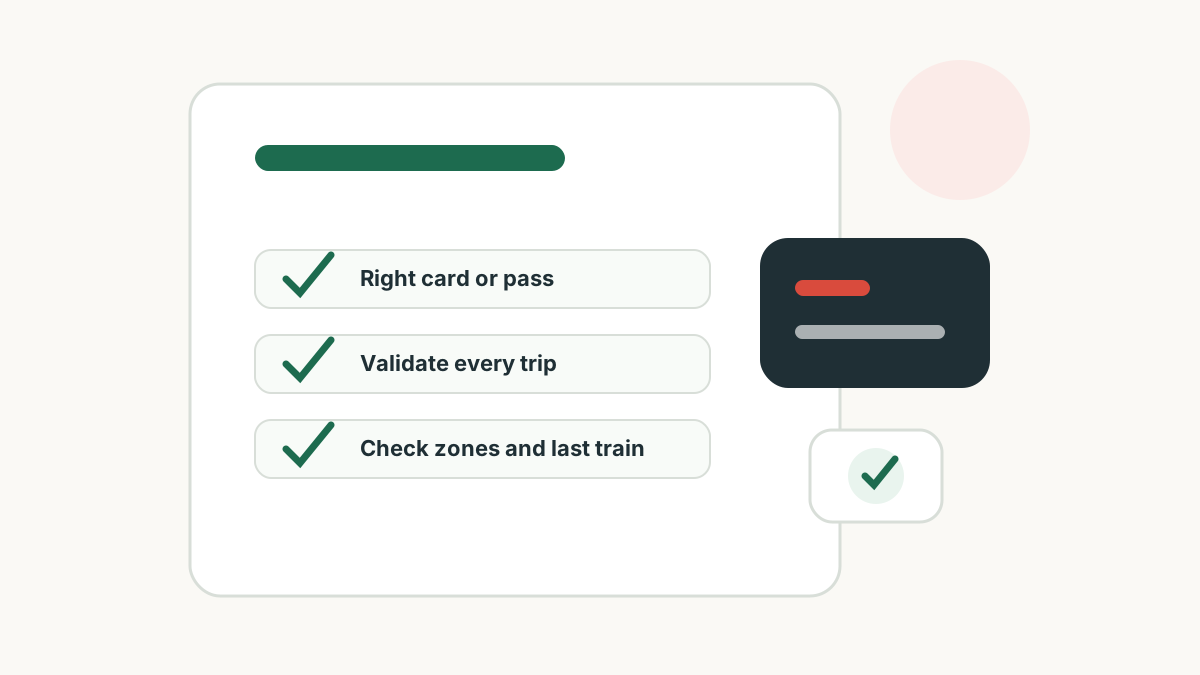
Practical Checklist
Before relying on a route:
- Identify every operator
- Check ticket or pass needed
- Check zones
- Confirm validation rules
- Check first and last service
- Test the trip during commuting hours
- Check weekend and holiday service
- Save official apps/sites
- Have a backup route
Summary
Public transport in Portugal works best when you treat it region by region. Lisbon, Porto, CP trains and smaller cities do not all use the same rules.
For daily life, learn the local card system, validate correctly, check zones, and test your commute before renting a home. The right route can make life in Portugal much easier; the wrong assumption can cost time, money and missed appointments.