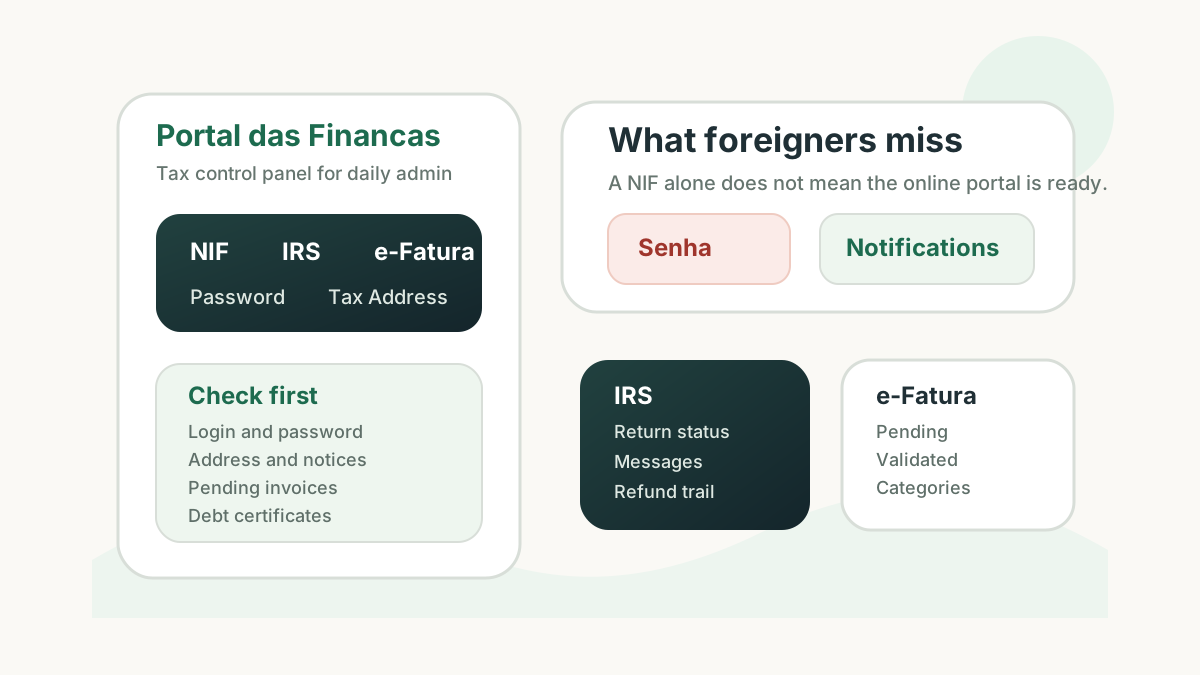
If you already have a Portuguese tax number, the next practical step is usually Portal das Finanças. Many foreigners stop after getting a NIF and only return to the tax portal months later, usually when a deadline, refund, invoice issue, or certificate request becomes urgent.
That delay causes unnecessary problems. The portal is where tax address, notifications, invoices, IRS status, and several useful certificates live. If you do not understand the basics early, it is easy to miss something important.
This guide explains what Portal das Finanças is, how to access it, how the password process works, what e-Fatura actually does, and which actions you should not submit unless you understand the consequences.
Last verified: April 26, 2026. Portal menus, password rules, and IRS workflows can change. Confirm current instructions in the official portal before you submit anything important.
Quick answer
Portal das Finanças is the Portuguese tax portal used by the Tax and Customs Authority. Foreigners use it to:
- sign in with their NIF and password or another supported authentication method
- manage or check their tax address
- review e-Fatura expenses
- check IRS information, messages, and filing status
- issue tax certificates
- review tax payments or debts
The biggest practical points are:
- your NIF does not automatically mean your portal access is ready
- the password is linked to your tax address
- e-Fatura needs attention, not just passive waiting
- you should not make IRS choices blindly just because the button is there
Who this guide is for
This guide is for foreigners who:
- already have a NIF and need the next step
- are waiting for a Portal das Finanças password letter
- need to check tax address, invoices, or IRS status
- want to understand what the tax portal is before an accountant asks for screenshots or files
- keep seeing Portuguese tax words and want a plain-English map first
It is general information, not personal tax advice.
Portal das Finanças explained
Portal das Finanças is the online tax area used to manage many day-to-day dealings with the Portuguese tax authority.
Foreigners often confuse it with:
gov.pt, which is the broader public-services websiteePortugal, which is a service information layere-Fatura, which is one function inside the tax ecosystem, not the whole tax portal
The practical rule is simple:
gov.ptexplains services- Portal das Finanças is where many tax actions and records actually sit
If you plan to live in Portugal for more than a very short period, you should expect to use it more than once.
How to access the portal
The portal can be accessed with:
- your NIF and access password
- some stronger authentication options supported by the platform
For many foreigners, the first real obstacle is not the login screen. It is getting the password in the first place and making sure it goes to the correct tax address.
If you have just received your NIF, do not assume the online part is already active. Check whether:
- you already requested the password
- the tax authority has the correct tax address
- the password letter has had enough time to arrive
Requesting or recovering password
The official tax portal says the access password is sent by post to the tax domicile linked to your NIF. That is why the address matters so much.
If you have never had a password
Use the official portal registration route and wait for the password letter. On first access, the portal requires that password to be changed.
If you lost access
The portal has recovery routes, but the practical fix depends on what actually went wrong:
- you never received the letter
- you received it but the password expired
- you no longer control the tax address
- your contact data needs updating
If the real problem is a stale address, recovering the password without fixing the address issue first may only delay the next problem.
What foreigners often miss
- The password letter is not just an inconvenience. It is part of the identity and address chain.
- If your tax address was wrong when you registered, the letter may go to the wrong place.
- If someone else handled the NIF process for you, confirm exactly which address was used.
Tax address and notifications
Your tax address is one of the most important details in the whole portal.
The official IRS guidance says your current information should be correct on the tax authority website before you file. That includes the address considered your official residence.
Why this matters:
- password letters and some notices depend on it
- residency and tax questions often depend on it
- wrong address data can create confusion later in banking, IRS, or residency-related processes
Do not treat address as a minor profile detail. In Portugal, tax address can have real consequences.
Notifications
People often ask where tax messages and notices appear. In practice, the portal becomes one of the places where you monitor:
- IRS status
- tax debts or regularization issues
- requests for clarification
- certificates and downloadable files
If you never log in, you may not realize you missed something until it becomes urgent.
e-Fatura basics
e-Fatura is where many foreigners first realize Portuguese tax admin is more active than they expected.
In practical terms, e-Fatura is where consumers can:
- validate invoices issued with their NIF
- check deductions
- classify or confirm some expense categories
- register some invoices that were not communicated properly
That means it is not just a passive list of receipts.
Why foreigners care
If you ask for an invoice with your NIF in Portugal, that expense may help with deductions later. But the result is not always automatic in the way people expect.
You may still need to:
- check whether the invoice appeared
- review pending invoices
- confirm categories
- deal with cases where a health expense needs extra confirmation
What can go wrong
- invoices stay pending and you ignore them
- an expense appears in the wrong category
- a health expense needs additional confirmation and you miss it
- you assume the merchant handled everything correctly
If e-Fatura looks messy, do not guess. Read the official guidance or ask an accountant before the relevant deadlines pass.
IRS basics
Portal das Finanças is where IRS becomes real for many foreigners.
You may use it to:
- check messages
- review pre-filled information
- file or monitor IRS returns
- see refund or payment status
The most important caution is simple: do not submit options you do not understand.
Examples of things foreigners should not click through blindly:
- automatic filing acceptance when cross-border income exists
- choices linked to special tax treatment
- expense assumptions that look convenient but may be wrong
- changes that affect residency, household, or deductions
If your situation is simple, the portal may feel straightforward. If your situation includes foreign income, self-employment, rental income, or recent relocation, simple-looking buttons can carry bigger consequences.
Certificates and payments
Portal das Finanças is also useful because it can issue practical documents.
One of the most relevant is the certidão de dívida e não dívida, which proves your tax situation to third parties.
The official tax portal says:
- it can be obtained from the certificate area
- it is available immediately as a PDF
- it is valid for 3 months
This can matter for:
- immigration paperwork
- professional paperwork
- some banking or contract checks
- proving regular tax status when asked
You can also use the tax portal to check or review:
- tax debts
- payment references
- tax documents already issued
Common Portuguese terms explained
| Portuguese term | Plain-English meaning |
|---|---|
| NIF | Portuguese tax identification number |
| senha de acesso | access password |
| domicílio fiscal | tax address / official tax domicile |
| e-Fatura | invoice and deduction system |
| IRS | personal income tax |
| certidão de dívida e não dívida | debt / no-debt tax certificate |
| e-Balcão | online contact/help channel with the tax authority |
Common mistakes
- getting a NIF and never finishing portal access
- using the wrong tax address
- waiting for IRS season before learning the portal
- ignoring e-Fatura until too late
- confusing
gov.ptinformation pages with the place where tax actions happen - submitting IRS choices without understanding them
- not saving PDFs of certificates or important portal outputs
Practical checklist
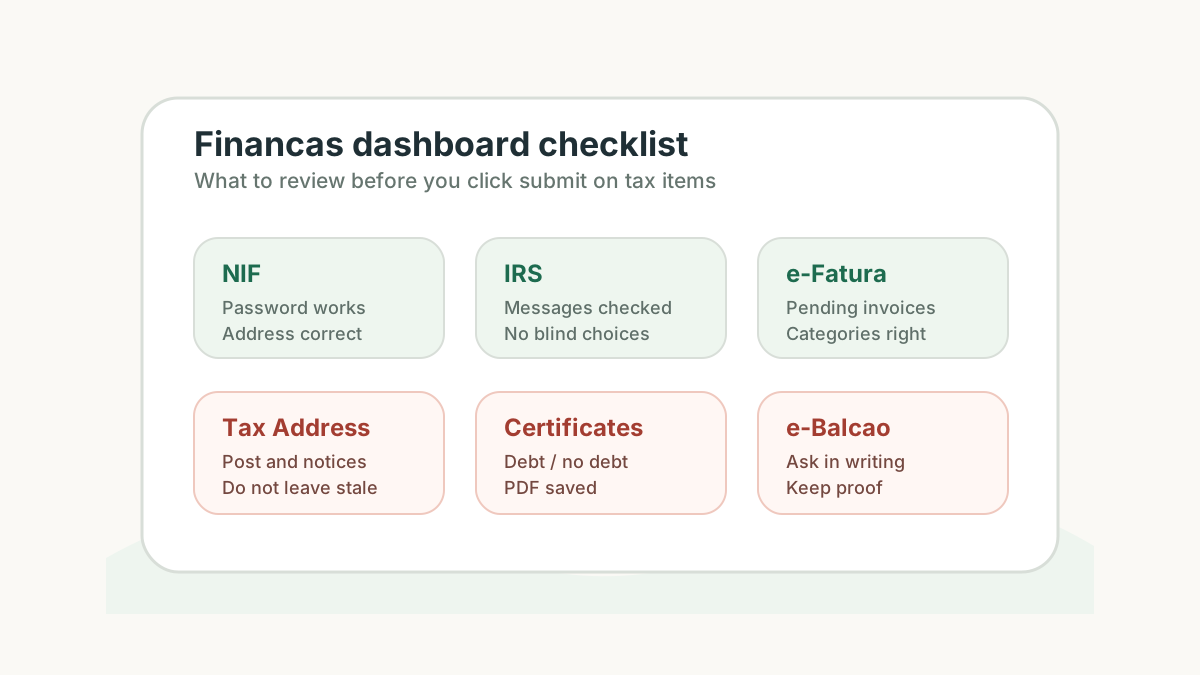
Before you rely on Portal das Finanças for something urgent, check:
- Do I already have working access?
- Is my tax address current?
- Do I know where to check messages and IRS status?
- Have I looked at e-Fatura, not just heard about it?
- Do I know how to get a debt or no-debt certificate if asked?
- Am I about to submit something that I do not fully understand?
When to ask an accountant
Ask a qualified accountant if:
- you moved tax residence recently
- you have foreign income
- you work on recibos verdes
- you are unsure about IRS choices
- you need to correct something and are not sure of the consequence
- the portal shows a problem you cannot interpret safely
The portal is useful, but it is still a tax system. Access is not the same as understanding.
Summary
Portal das Finanças is one of the most important practical systems foreigners use after getting a NIF.
The biggest early wins are simple:
- get access working
- make sure the tax address is right
- learn the difference between e-Fatura, IRS, and certificates
- do not click through tax choices just because the portal allows it
If you understand those basics early, you avoid a lot of avoidable stress later.