
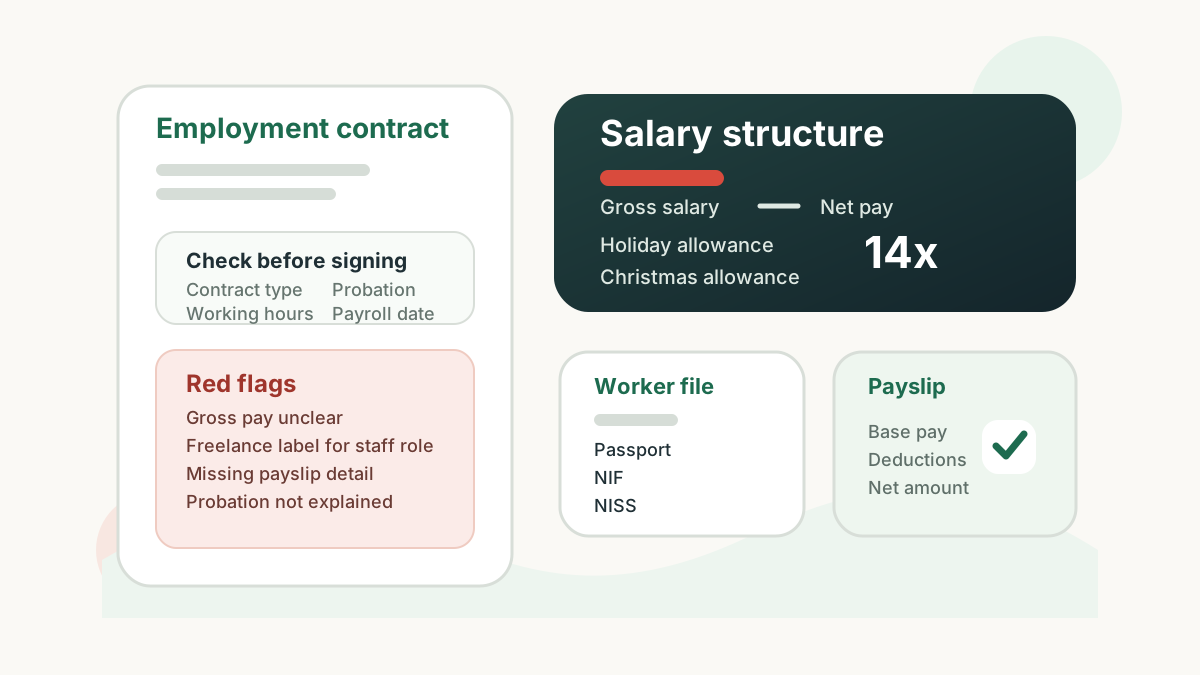
If you are about to start a job in Portugal, the contract matters more than the job title alone. Foreigners often focus on the visa, the move, or the salary offer and only read the contract properly when something goes wrong.
That is risky. A Portuguese employment contract can look simple on the surface but still hide important questions about salary structure, probation period, contract duration, working hours, and whether the role is really employment or disguised freelancing.
This guide explains what an employment contract in Portugal means, what to check before signing, what a payslip should help you understand, and when to stop and ask ACT or a qualified professional for help.
Last verified: April 26, 2026. Contract rules, salary amounts, and residence-related practice can change. Confirm the current rule with official sources or a qualified professional before you sign.
Quick answer
An employment contract in Portugal is the agreement that sets the basic terms of your job: who you work for, what you do, how much you are paid, how long the contract lasts, and what rules apply to working time, leave, and termination.
Foreigners should check more than the salary number. Before signing, make sure you understand:
- whether the contract is fixed-term or permanent
- whether a probation period applies
- whether the salary is shown as gross or net
- how the 13th and 14th month payments work
- what the normal weekly hours and schedule are
- whether the employer is hiring you as an employee or pushing you into a freelancer setup
- what documents the employer expects from you before payroll starts
If the company says you are “freelance” but controls your hours, place of work, and daily tasks like an employee, pause and get advice before agreeing.
Who this guide is for
This guide is for foreigners who:
- are about to sign their first Portuguese work contract
- moved to Portugal recently and are not familiar with local payroll terms
- received an offer with a gross salary and want to understand what that means in practice
- are being asked whether they can work as an employee or on recibos verdes
- want to know what red flags to notice before they commit
It is general information, not personal legal advice.
Employment contract basics
In Portugal, an employment relationship is usually built around a contrato de trabalho. That is the Portuguese term for an employment contract.
The contract should make it clear:
- who the employer is
- who the worker is
- what job or function the worker will perform
- where the work is carried out
- when the employment starts
- whether the contract has an end date
- what salary or other remuneration is paid
- what working schedule applies
As a practical baseline, foreigners should expect the normal weekly hours, shift pattern, and any overtime expectations to be clear enough to compare with what was promised verbally.
Some employment relationships can exist even when the paperwork is delayed or incomplete, which is one reason foreigners should not assume that “we will sort the contract later” is harmless.
Portuguese terms explained
These are some of the terms foreigners commonly see first:
| Portuguese term | Plain-English meaning |
|---|---|
| contrato de trabalho | employment contract |
| contrato sem termo | open-ended or permanent contract |
| contrato a termo certo | fixed-term contract with a stated end date |
| periodo experimental | probation period |
| retribuicao base | base salary |
| subsidio de ferias | holiday allowance |
| subsidio de Natal | Christmas allowance |
| recibo de vencimento | payslip |
| trabalhador por conta de outrem | employee |
| trabalhador independente | self-employed worker/freelancer |
If a contract uses terms you do not understand, ask for an explanation before signing. That is not difficult behavior. It is basic self-protection.
Documents employers may ask for
Employers can ask for documents needed to identify you, pay you, register you correctly, and confirm that you can work legally in your situation.
Common requests include:
- passport or ID card
- Portuguese NIF
- Portuguese NISS if already assigned
- residence document, visa, or other proof of lawful stay where relevant
- Portuguese bank account details for salary payment
- tax information or address details
- qualifications or certificates for regulated professions
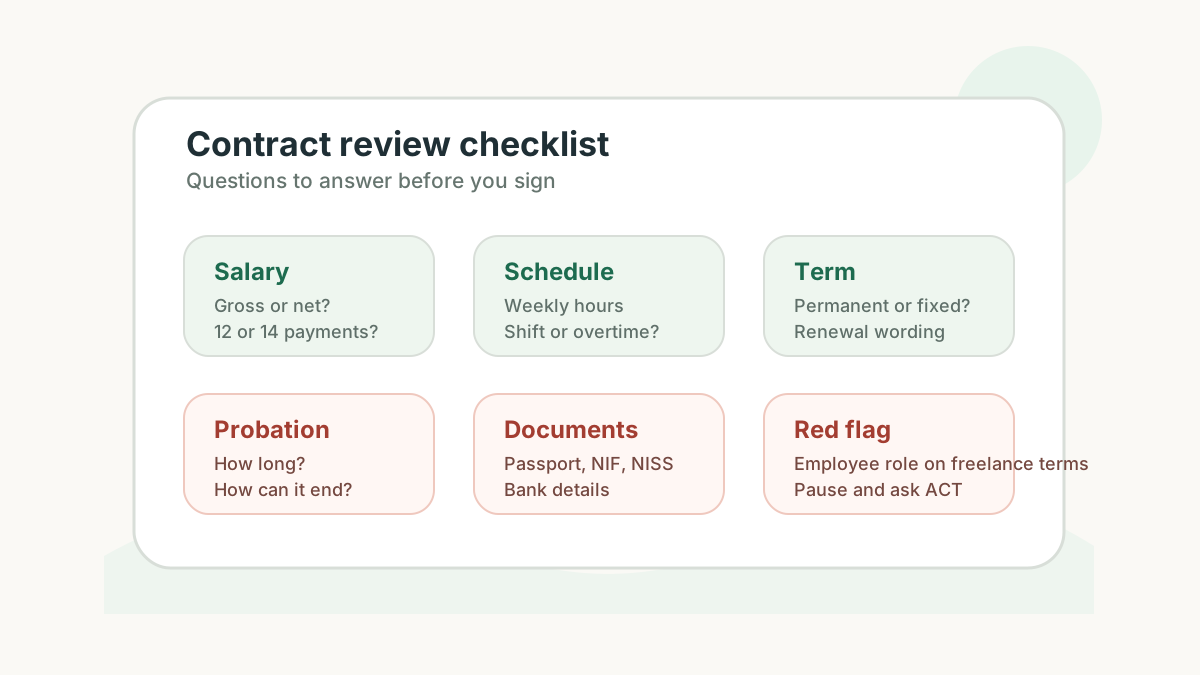
If you do not have a NISS yet, do not guess what the company expects. Ask a direct question:
- Can payroll start before my NISS is fully registered?
- Will the employer handle the social security communication or do I need to bring something first?
- Which exact documents do you need from me before my first payslip?
Start with our guides to getting a NIF in Portugal and getting a NISS in Portugal if those numbers are still missing.
Salary: gross, net, 13th and 14th month
This is one of the biggest points of confusion for foreigners.
Gross salary versus net salary
Gross salary is the salary before deductions. Net salary is what reaches your account after the relevant deductions are taken.
If an employer says “the salary is 1,400 euros,” that does not automatically tell you what you will actually receive each month. You need to know:
- is that amount gross or net?
- is it paid over 12 months or 14?
- are meal allowance or bonuses included or separate?
- which deductions will appear on the payslip?
Do not accept vague language such as “you will take home around this amount” without seeing how the structure works.
13th and 14th month payments
Foreigners are often surprised that Portuguese employment commonly includes:
- holiday allowance
- Christmas allowance
This is why people talk about “14 salaries.” In practice, the annual pay structure may be distributed over 14 payments rather than a simple 12-month model.
That does not always mean you are earning more than you thought. It means you need to understand how the annual amount is being split.
Ask these questions clearly:
- What is the annual gross salary?
- How many regular salary payments are there?
- Are holiday and Christmas allowances paid separately, monthly in duodecimos, or another way allowed by the contract?
- Are meal allowances included in the quoted figure?
If the employer only shows a monthly number and never explains the annual figure, ask for the annual gross amount in writing.
Probation period and contract type
The probation period is the initial period during which the employment relationship is still being tested.
Foreigners often make two mistakes here:
- they assume a probation period is always the same length
- they do not check how the contract can be ended during that period
Before you sign, identify:
- whether the probation period exists
- how long it lasts
- whether the contract is fixed-term or permanent
- when a fixed-term contract ends
- whether renewal is automatic, possible, or excluded
Fixed-term versus permanent contracts
The practical difference matters.
| Contract type | What to check |
|---|---|
| Permanent / open-ended | probation period, notice rules, working conditions, salary structure |
| Fixed-term | end date, renewal wording, reason for temporary nature, what happens at the end |
If the contract is fixed-term, ask what the employer expects after that term. A short answer such as “we will see later” is not enough if your residence planning or housing depends on stable work.
Payslip explained
Your recibo de vencimento is the monthly record that should help you understand what you were paid and what was deducted.
A payslip commonly shows:
- base salary
- allowances paid that month
- holiday or Christmas allowance if applicable
- employee deductions
- the final net amount
Even if payroll is outsourced, do not ignore the first payslip. Check it carefully.
Questions to ask if something looks wrong:
- Does the gross salary match the contract?
- Are there deductions I do not understand?
- Is an allowance missing or combined in a confusing way?
- Does the amount paid to my bank match the payslip?
If the numbers do not make sense, raise it quickly and keep a written record of the question.
Employee versus freelancer warning
This is one of the most important sections for foreigners.
An employee works under the employer’s direction. A freelancer or trabalhador independente runs an independent activity and usually invoices through recibos verdes.
That difference is not just tax paperwork. It changes the whole relationship.
Warning signs that a company may be trying to shift employee risk onto you:
- they require fixed office hours
- they control your daily work like staff
- they expect exclusivity
- they provide a manager and internal schedule
- they want you to invoice like a freelancer instead of putting you on payroll
Sometimes a company says a freelancer setup is “easier for everyone.” For the worker, it may not be easier at all. It can move tax, contribution, and legal risk onto you.
If that is the situation, read our guide to Recibos Verdes for Foreigners in Portugal and do not assume the arrangement is harmless because it sounds common.
Red flags before signing
Pause and ask more questions if:
- the employer refuses to give you a written version to review
- the salary is described only vaguely
- nobody explains whether the contract is fixed-term or permanent
- probation is mentioned casually but not clearly
- you are pushed toward recibos verdes for a normal employee role
- the employer wants you to start first and discuss paperwork later
- the language of the contract is not clear enough for you to understand
- the company avoids answering basic payroll questions
Is an English contract enough?
The safe question is not “is English allowed?” but “do I clearly understand the contract I am signing?”
If the company gives you a Portuguese contract and says “it is standard,” ask for:
- an English explanation of the key clauses
- clarification of salary structure
- clarification of contract type and probation
- time to read it properly
Do not sign only because you are afraid of losing the opportunity.
What to ask the employer
Before signing, ask:
- Is this role employment or freelance?
- What is the annual gross salary?
- How are the 13th and 14th month payments handled?
- Is meal allowance included or separate?
- How long is the probation period?
- Is the contract fixed-term or permanent?
- What documents do you need from me before payroll starts?
- If my NISS is still in process, what happens next?
- Who should I contact if the first payslip is wrong?
Clear employers can answer these questions directly.
What can go wrong
Real problems foreigners run into include:
- discovering too late that the monthly take-home pay is lower than expected
- signing a fixed-term contract without noticing the end date
- finding out that holiday or Christmas allowance was not understood properly
- being treated like an employee while invoicing as a freelancer
- not being given a payslip that is easy to understand
- staying quiet about a problem because residence status feels fragile
That last point matters. A foreign worker can feel easier to pressure, especially when housing, income, and immigration paperwork all depend on the same employer.
If something feels off, do not wait until several months of paperwork pile up.
Practical checklist before signing
- Confirm whether the salary quoted is gross or net.
- Ask for the annual gross amount in writing.
- Check whether pay is structured over 12 or 14 months.
- Read the probation period clause carefully.
- Check whether the contract is fixed-term or permanent.
- Confirm start date, workplace, and expected hours.
- Confirm whether meal allowance is separate.
- Ask what is needed for NISS and payroll setup.
- Check whether the role should really be employment, not freelance.
- Keep a copy of the signed contract and the first payslip.
When to contact ACT or a professional
Contact ACT or get qualified legal help when:
- you think the company is disguising employment as freelancing
- the contract terms do not match what was promised
- payslips or payments are repeatedly wrong
- you are pressured to work without proper employment documentation
- you fear retaliation for raising basic labour questions
Get accountant help when your situation moves between employment and self-employment, or when payroll questions overlap with IRS or international tax questions.
Our IRS guide for foreigners is a good next step if you are trying to understand how salary, deductions, and residency fit together.
Summary
An employment contract in Portugal is not just an admin form. For a foreign worker, it affects income, residence planning, payroll, and how easy it is to challenge a problem later.
Before signing, understand the contract type, the probation period, the annual gross salary, the 14-payment structure, and whether the company is hiring you as an employee or trying to move you into a freelancer model. A careful reading at the start is much easier than fixing a bad setup after your first payslip.