
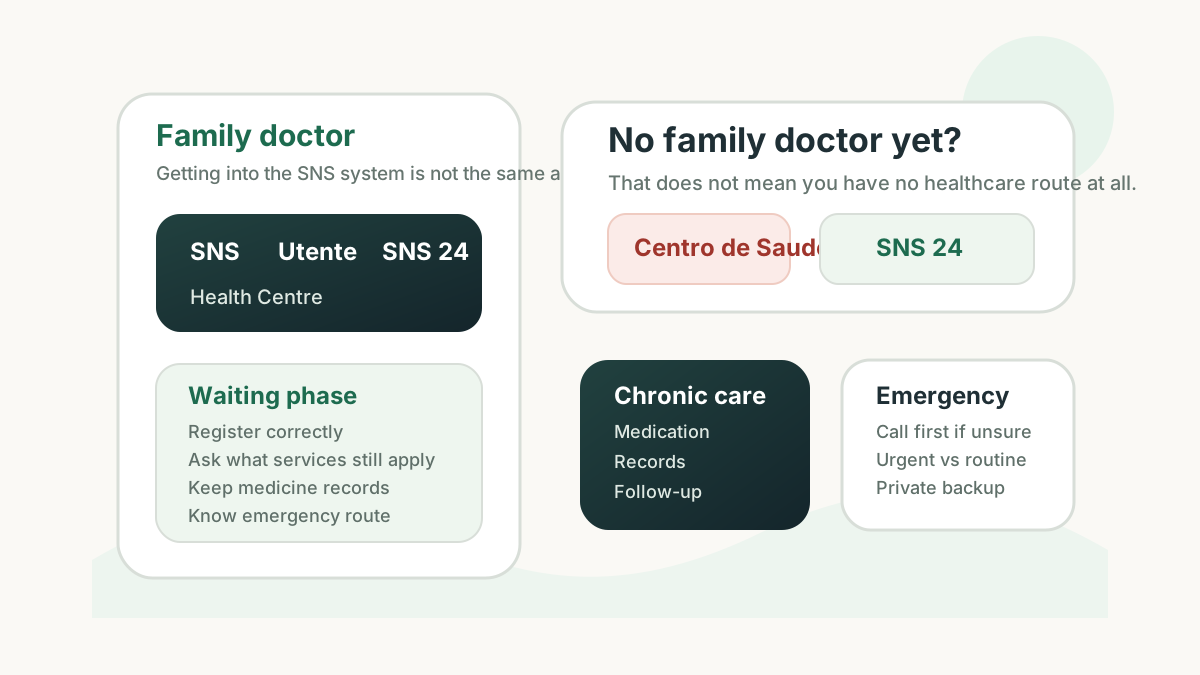
If you have an utente number but still do not have a family doctor, you are not the only one. This is one of the most common points of confusion for foreigners using healthcare in Portugal.
The practical problem is that several steps sound similar but mean different things. You can be registered in the SNS system, have an assigned health centre, and still be waiting for a médico de família. That does not mean you have no options, but it does mean you need to understand how the system works in real life.
Last verified: April 26, 2026. Healthcare access, local waiting times, and service organisation can change. Confirm urgent or important decisions with your health centre, SNS 24, or a qualified healthcare professional.
Quick Answer
- A family doctor in Portugal is a médico de família, the main doctor responsible for your primary care in the SNS.
- Foreigners do not automatically receive a family doctor just because they moved to Portugal.
- In practice, you usually need to register with the SNS system first, normally through your utente number and your local centro de saúde.
- Some areas have shortages, so it is possible to be registered at a health centre but still wait for doctor assignment.
- While waiting, you may still be able to use healthcare through your health centre, SNS 24, urgent care, emergency services, or private care depending on the situation.
Who This Guide Is For
This guide is for foreigners who:
- already have an utente number but no family doctor
- want to register at a Portuguese health centre
- need to understand what the SNS can and cannot do while they are waiting
- have children, chronic conditions, repeat prescriptions, or regular follow-up needs
- are deciding whether private healthcare is needed as a backup
If you do not yet have an SNS user number, start with our guide to getting an utente number in Portugal.
Médico de Família Explained
A médico de família is your family doctor in the Portuguese public system. This doctor is usually the main contact point for routine healthcare needs, including:
- general consultations
- follow-up for ongoing conditions
- repeat prescriptions
- referrals to specialists
- prevention and routine monitoring
This is different from simply being in the SNS database. Many foreigners assume that once they have an utente number, a doctor is assigned automatically. In practice, that is not always true.
Utente Number First
For most foreigners, the first SNS step is getting a número de utente. That number identifies you in the public healthcare system.
It is important, but it is not the final step. The utente number helps you access the system, but it does not guarantee:
- immediate family-doctor assignment
- same-day appointments
- identical access conditions in every area
Think of it this way:
- Utente number gets you into the system.
- Health-centre registration links you to a local primary-care service.
- Doctor assignment depends on local capacity and organisation.
How to Register at a Health Centre
In everyday Portuguese life, primary care normally starts at the centro de saúde serving your area.
When registering, you may be asked for documents such as:
- identification document
- utente number or data needed to request it
- proof of address
- tax number if requested for administrative matching
- residence documents or other status documents, depending on your situation
Bring originals and copies where possible. If the office gives instructions verbally, ask for the main requirements in writing or note them down before leaving.
What to Ask at the Desk
Do not stop at “Am I registered?” Ask more precise questions:
- Am I registered at this health centre?
- Do I already have a family doctor assigned?
- If not, am I on a waiting list?
- How do I request appointments while waiting?
- What should I do for repeat medication or chronic follow-up?
That avoids the common misunderstanding where a person hears “you are in the system” and assumes that means “you already have a doctor.”
Why You May Not Get a Family Doctor Immediately
Portugal does not have equal primary-care capacity everywhere. Some health centres have enough staff. Others do not.
Common reasons for delay:
- local shortage of doctors
- new arrival in an area with long waiting lists
- administrative backlog
- incomplete or outdated registration data
This can be frustrating, but it is not unusual. The key point is that lack of immediate assignment is often a capacity problem, not proof that your registration failed.
What to Do While Waiting
If you are registered but still do not have a family doctor, do not assume you must do nothing until one appears.
Depending on your situation, practical steps may include:
- asking the health centre how unassigned users request consultations
- asking what route applies for prescriptions, test results, or chronic monitoring
- using SNS 24 for triage before going in person
- using private consultations when you need speed, English-speaking access, or continuity that you cannot get quickly through SNS
If the Health Centre Says It Is Full
Ask clear follow-up questions:
- Are they refusing registration, or only saying there is no doctor available yet?
- Is there a waiting list?
- Is there another local unit or procedure for your area?
- What is the process for consultations while unassigned?
Do not leave with only a vague answer. The real issue may be doctor assignment, not total lack of access.
SNS 24 vs Health Centre vs Emergency
Foreigners often lose time because they pick the wrong route for the problem.
Use the Health Centre For
- routine appointments
- follow-up care
- non-urgent prescriptions
- referrals
- chronic-condition management
Use SNS 24 For
- advice on what service to use next
- help deciding whether a problem is urgent
- guidance when you do not know whether to wait, book, or seek urgent care
SNS 24 is especially useful when you are new to the system and do not know the local pathway.
Use Urgent Care or Emergency For
- serious or worsening symptoms
- situations that cannot wait for routine primary care
- potential emergencies
Do not use emergency services as a replacement for normal family-doctor follow-up unless the situation is genuinely urgent.
Private Healthcare While Waiting
Private healthcare can help, but it does not replace everything the SNS does.
It may help with:
- faster GP appointments
- specialist access
- English-speaking doctors
- test scheduling
It may not solve:
- your lack of SNS registration
- your need for a public-system record in some situations
- every chronic-care or reimbursement issue
- every prescription workflow
Private insurance also does not mean unlimited access. There may be waiting periods, exclusions, copayments, network limits, or pre-existing-condition restrictions.
If you already read our guide to public vs private healthcare in Portugal for foreigners, use that as the wider system overview and this guide as the practical family-doctor piece.
Documents to Keep Ready
If you are trying to register, follow up, or manage care while waiting, keep a simple file with:
- identification
- utente number details
- proof of address
- medication list
- copies of important test results
- chronic-condition history
- previous prescriptions
- notes of dates, names, and instructions from the health centre
This matters even more if you have:
- children
- pregnancy-related care needs
- chronic conditions
- ongoing specialist follow-up
- repeat medication needs
What Families, Students, Retirees, and Chronic Patients Should Watch
Different groups hit different problems.
Families
Ask early how child registration, vaccinations, and routine follow-up work in your area. Do not assume the process will happen automatically.
Students
Students often have light day-to-day health needs until something goes wrong. Registering early is still useful because waiting until you are already ill creates more stress.
Retirees
Retirees should keep a clean paper trail for medication history, previous diagnoses, and current treatment plans.
People With Chronic Conditions
Do not wait until your medication is almost finished. Ask early how repeat prescriptions and routine follow-up are handled while you are still unassigned.
Common Mistakes
The most common mistakes are:
- assuming an utente number automatically means a family doctor
- leaving the health centre without confirming assignment status
- not asking how appointments work while waiting
- using emergency care for routine matters
- assuming private insurance replaces all SNS needs
- arriving without proof of address or supporting documents
- not keeping written notes of instructions, appointments, or submissions
Another frequent mistake is treating every region as if it works the same way. Local organisation can differ. The safe approach is to confirm your own local process clearly.
Practical Checklist
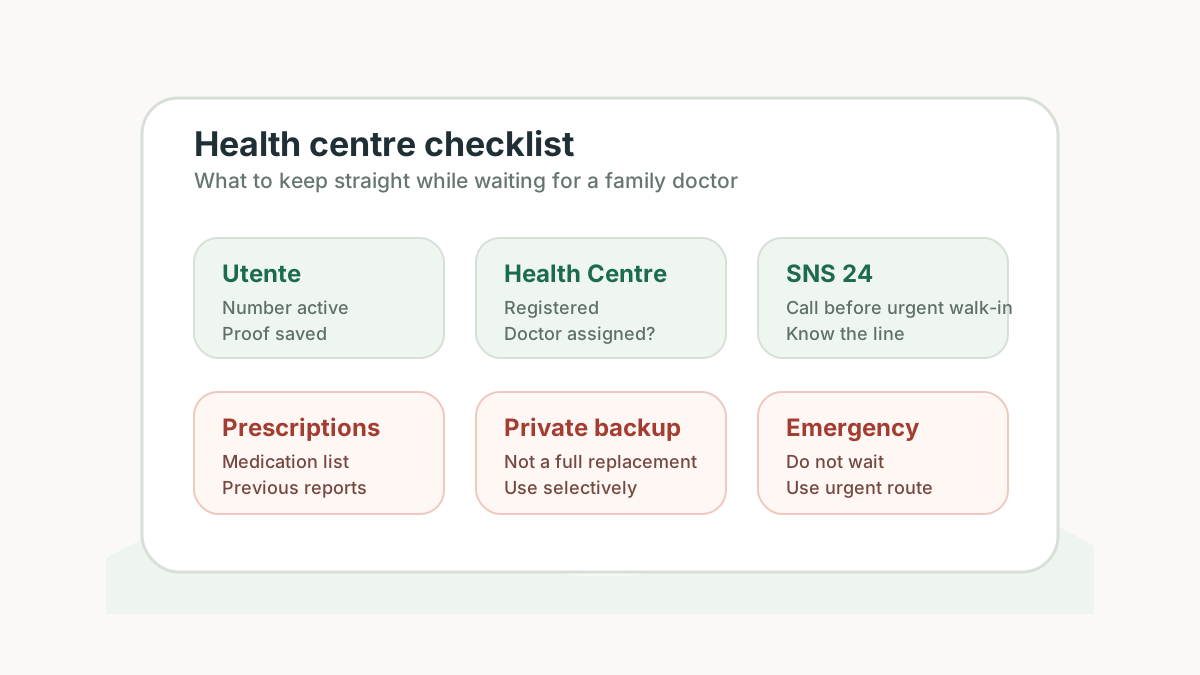
Before you depend on the SNS for regular care, try to confirm all of the following:
- I have an utente number
- I know which health centre serves my address
- I know whether I am registered there
- I know whether I already have a family doctor assigned
- If not assigned, I know how to request care while waiting
- I know when to call SNS 24
- I know where to go for urgent care in my area
- I keep my medication and document file ready
- I understand whether private care is only a temporary backup or part of my long-term plan
Summary
Getting a family doctor in Portugal is not always immediate, even when you are already inside the SNS system. The key is to separate three things clearly: your utente number, your health-centre registration, and actual doctor assignment.
If you do not have a family doctor yet, the practical next step is not panic. It is clarity. Confirm your registration status, ask what route applies while you wait, use SNS 24 for triage when needed, and keep your documents organised. That gives you a working healthcare plan even before the ideal situation is in place.